
VPro® 5-Layer Micro-Encapsulation: A Technical Guide to Probiotic Powder Stability
VPro® 5-Layer Micro-Encapsulation: A Technical Guide to Probiotic Powder Stability
VPro® 5-Layer Micro-Encapsulation — supplied under the model code VPro®-5L-COAT — is a protective coating system that wraps individual probiotic cells in five engineered barrier layers built on a food-grade polysaccharide and protein composite matrix. The material is developed and produced by Shanghai Unibio Lab Co., Ltd (Helplifes), a probiotic R&D, manufacturing and CDMO enterprise based in Shanghai, China. Its documented buyer groups are probiotic raw material factories, supplement manufacturers and food processing plants.
This guide explains what each of the five layers does, which stability problems the coating addresses — freeze-drying stress, heat, moisture, oxygen, gastric acid and bile — how the barrier is specified for strains such as Bifidobacterium longum CCFM1195, and which CFU/g ranges, storage conditions and transport rules a project team should settle before moving from a sample to a bulk order.
Quick answer. VPro®-5L-COAT is a five-layer micro-encapsulation material listed with a 5-layer acid and bile resistant barrier, improved heat resistance and extended strain shelf life. It is applied to strains such as Bifidobacterium longum CCFM1195, which is supplied at 10B–200B CFU/g with a 24-month shelf life under recommended storage in a well-closed container away from moisture and direct sunlight at room temperature.
1. What Stability Means in a Probiotic Powder Project
Stability in raw probiotic powder is not a single property. It is a set of survival thresholds measured at different stages of a product's life: after freeze-drying, after blending and filling, after months in a warehouse or shipping container, and after transit through the stomach. Coating decisions change which of those thresholds hold.
Four stress vectors decide the viable count
- Freezing and lyophilization stress. Water removal and ice-crystal formation damage cell membranes and proteins. The VPro® system documents a dedicated micromolecular protective layer described as anti-freezing and anti-stress.
- Heat during processing and transport. Powder blending, tableting and high-temperature food processing expose cells to temperatures above their optimum. VPro®-5L-COAT is listed with improved heat resistance as a product parameter.
- Moisture and oxygen during storage. Water uptake and oxidation are the main causes of viable-count decay in ambient warehouses and long-haul shipping. The VPro® architecture includes an oxygen and moisture barrier layer documented as extending shelf stability.
- Gastric acid and bile after ingestion. A cell that survives manufacturing but not digestion delivers no dose. The coating includes an acid and enzyme resistant layer documented as surviving gastric digestion.
Unibio describes the VPro® five-layer embedding technology as a response to core industrial pain points such as acid, bile, oxygen and freezing damage to probiotics — which is why the coating is treated as a specification item rather than a marketing add-on.
2. Industry Background: Why Encapsulation Entered the Specification Sheet
Demand for probiotic ingredients keeps expanding, and with it the tolerance for ambient-stable formats. The global probiotics market was valued at USD 72.1 billion in 2024 and is projected to reach USD 165.1 billion by 2034 (Global Market Insights). The probiotic dietary supplement segment alone reached USD 10.60 billion in 2026, with a forecast CAGR of 9.5% through 2031 (MarketsandMarkets). Faster-growing adjacent categories such as baby probiotics — USD 2.27 billion in 2024, forecast to grow at an 8.6% CAGR to USD 5.6 billion by 2035 (WiseGuyReports) — place the same pressure on ingredient stability.
On the technical side, microencapsulation using wall materials such as alginate or chitosan is recognized as a key trend for maintaining probiotic viability through gastric acid and bile salts (PMC / MDPI). That trend is now visible in how buyers write specifications: barrier structure, CFU/g delivery, storage classification and shelf-life data are requested alongside price.
Regulation reinforces the same pattern. In the United States, probiotic supplements fall under 21 CFR Part 111 and must comply with current Good Manufacturing Practices (FDA / Eurofins), while ISO 22000 remains the international food safety management standard applied to the probiotic production chain, incorporating HACCP principles. A coating claim therefore has to sit inside a documented quality system, not outside it. Shanghai Unibio Lab Co., Ltd holds ISO 22000, FSSC 22000 and GMP food manufacturing certification (SGS), together with HALAL and Orthodox Union Kosher certificates and FDA US food facility registration, and maintains a strain bank reported at more than 30,000 microbial strains (Ingredients Network / Unibio).
3. The VPro® 5-Layer Architecture, Layer by Layer
The coating matrix is a food-grade polysaccharide and protein composite. Within that matrix, five functional layers are documented, each aimed at a different failure point in the strain's journey from fermenter to finished product.
| Documented layer | Documented function | Stress vector addressed |
|---|---|---|
| Micromolecular protective layer | Anti-freezing and anti-stress protection | Freezing and lyophilization stress |
| Prebiotic nutrition layer | Supports in-vivo proliferation | Recovery after ingestion |
| Liposome enteric adhesion layer | Boosts intestinal colonization | Transit and colonization |
| Acid and enzyme resistant layer | Survives gastric digestion | Stomach acid and digestive enzymes |
| Oxygen and moisture barrier layer | Extends shelf stability | Humidity and oxidation during storage |
The layers act at different moments rather than simultaneously, which matters when a buyer maps coating performance to a specific process. The oxygen and moisture barrier layer works during warehouse and transport time; the acid and enzyme resistant layer works after consumption. A formulator who only measures one of those windows is likely to over-specify the other.
Documented performance parameters of the VPro® platform
- Freeze-drying survival rate lifted by 40%.
- Shelf life extended to 24 months.
- Fermentation density above 3.5×10¹⁰ CFU/mL.
- Lyophilized powder concentration up to 8.0×10¹¹ CFU/g.
- Process support includes high-density ion-exchange culture, automatic feedback feeding and biofilm stabilization techniques.
Read together, those figures explain the intended application: ultra-high viable count raw materials intended for long-distance export and high-temperature food processing. They are platform-level figures for the VPro® process, not a per-strain guarantee — individual strain specifications still govern what a buyer receives in each shipment.
4. How the Barrier Protects Bifidobacterium longum CCFM1195 from Heat and Moisture
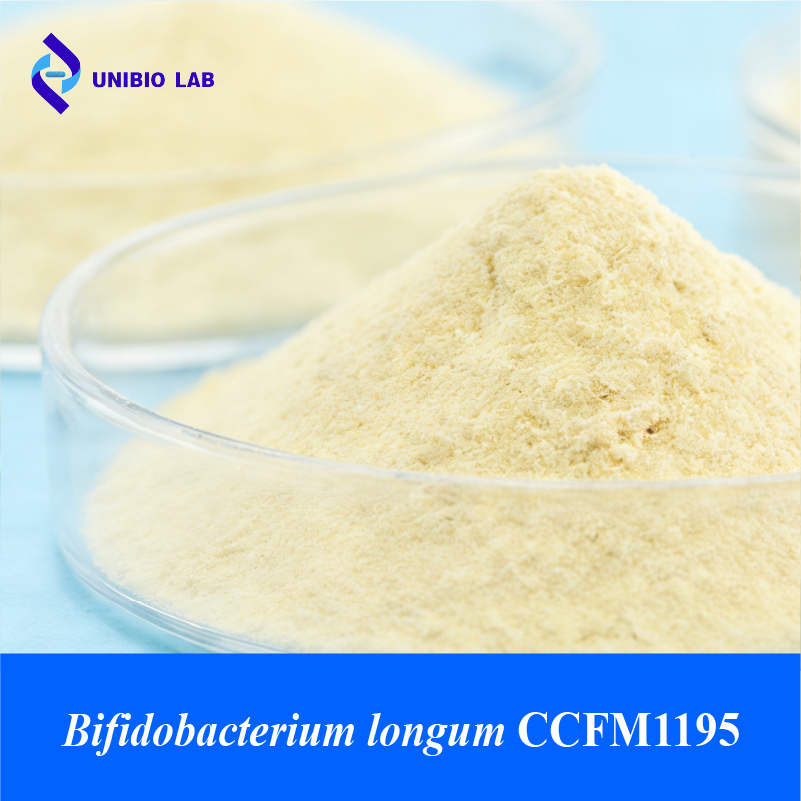
Bifidobacterium longum CCFM1195 is one of the strains supplied with VPro® 5-layer encapsulation material. Its documented specification states a viable count of 10B–200B CFU/g, a shelf life of 24 months under recommended storage, a composition of probiotic strain plus maltodextrin carrier plus VPro® 5-layer encapsulation material, and a storage instruction to keep the product in a well-closed container away from moisture and direct sunlight at room temperature. Its listed industries are food and beverage, dietary supplements and health products.
The room-temperature classification is the commercially important part. Ambient storage is only credible when moisture and oxygen ingress are controlled at two levels: inside the particle, through the oxygen and moisture barrier layer, and outside it, through sealed packaging and moisture-proof, light-proof transportation. Together these two controls are what allow a heat- and moisture-sensitive species to be shipped and warehoused without a cold chain.
Heat resistance is handled at the particle level as well. VPro®-5L-COAT is specified with improved heat resistance, and the micromolecular protective layer is designed to reduce freezing and stress damage during lyophilization — the step where much of the viable-count loss in conventional processing occurs. For a project using CCFM1195 in a solid beverage, capsule or sachet, that combination determines how much overage must be built into the formula.
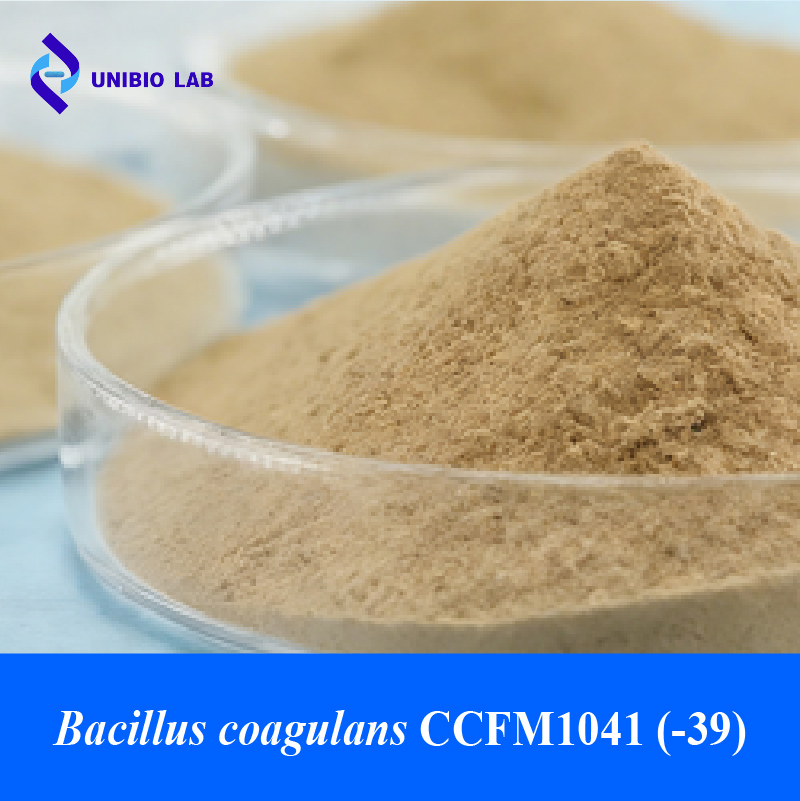
It is worth noting that storage class remains strain-specific, not platform-wide. Within the same VPro®-based portfolio, Lactobacillus acidophilus L59 is specified for sealed storage at -18°C or below, Lactobacillus plantarum CCFM602 is specified for sealed cold storage at 2°C–8°C, and Bacillus coagulans CCFM1041 (-39) is specified for room-temperature storage. Buyers should work from the individual product specification and batch COA rather than assuming one storage rule for an entire encapsulated range.
5. Step-by-Step: Specifying VPro®-5L-COAT in a New Project
A coating specification is only useful if it survives contact with the filling line. The sequence below follows the order in which technical and procurement questions usually arise.
- Anchor the strain and the commercial dose. Start from the health target and the finished dose per serving, then work back to the required CFU/g in the raw powder. Different strains in the encapsulated portfolio are documented across different ranges.
- Confirm the coating format against the process. VPro®-5L-COAT is listed as a VPro® 5-Layer Microencapsulation Protective Coating Material for probiotic raw material factories, supplement manufacturers and food processing plants. Confirm whether the coated powder will be blended, filled into capsules, compressed into tablets or suspended in a beverage, since each process applies a different mechanical load to the coating.
- Fix the CFU/g specification and overage. Documented ranges in the encapsulated range include 10B–200B CFU/g for Bifidobacterium longum CCFM1195, 10B–300B CFU/g for Bacillus coagulans CCFM1041 (-39), 10B–300B CFU/g for Lactobacillus rhamnosus GG, and 10B–600B CFU/g for Bifidobacterium animalis subsp. lactis BL03. Overage is then calculated from the loss expected across processing and shelf life.
- Set the storage and transport class. Decide between room-temperature sealed storage away from moisture and direct sunlight, 2°C–8°C sealed cold storage, or sealed storage at -18°C or below, based on the strain specification. Plan moisture-proof and light-proof transportation and confirm compliance with international food safety standards.
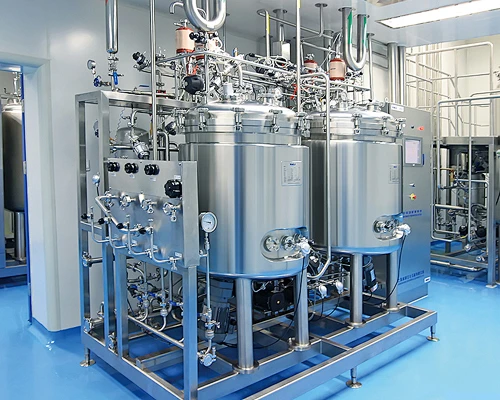
- Match equipment to the storage class. Documented supporting equipment for these applications includes a low-temperature storage cabinet, a vacuum packaging machine and powder mixing equipment.
- Agree the quality control plan. Unibio performs 100% in-house testing for viable count, microbial safety and heavy metals, and supports third-party inspection by SGS or Intertek on client request, with batch COA provision as standard after-sales support.
- Validate at sample scale, then scale to bulk. Minimum order quantities are documented at 1 kg for single-strain raw powder and 5 kg for multi-strain compound powder, with 5,000 bottles as the minimum for private-label finished capsules or tablets.
- Confirm lead time and trade terms before committing the launch date. Bulk raw material orders are documented at 5–7 days, and private-label finished product orders at 25–35 days, with FOB Shanghai, CIF, DDU and DDP available.
6. Project Fit: Where the Five-Layer Format Is Specified
Encapsulation is usually selected because a project has a specific failure risk: a hot climate, a long shipping lane, a high-temperature food process, or a strain with poor intrinsic survival. Documented cooperation cases show the pattern.
- Dietary supplement brands and raw material distributors (United States, Germany). A three-year cooperation covering an annual bulk order of 120 tons of multi-strain probiotic powder for the US market and 75 tons of single-strain powder for Germany, used in gut health capsules and immunity chewable tablets. The reported outcome was a 42% year-on-year increase in the customer's product sales with stable strain viability through shelf life, supported by VPro® five-layer microencapsulation and full third-party test reports.
- Fermented food and beverage manufacturers (Thailand, Indonesia). A two-year cooperation supplying 60 tons of DVS yogurt starter and 90 tons of functional probiotic beverage powder per year for yogurt, fermented milk and probiotic sparkling drink production, with HALAL-certified raw materials matching local market requirements.
- Health product wholesalers and pharmacy chain suppliers (Saudi Arabia, UAE). A monthly consignment of 12,000 bottles of HelpGut® capsules plus 8 tons of Akkermansia muciniphila AH39 raw powder, running for 1.5 years, with GRAS and HALAL documentation supporting customs clearance and customized Arabic packaging and labelling.
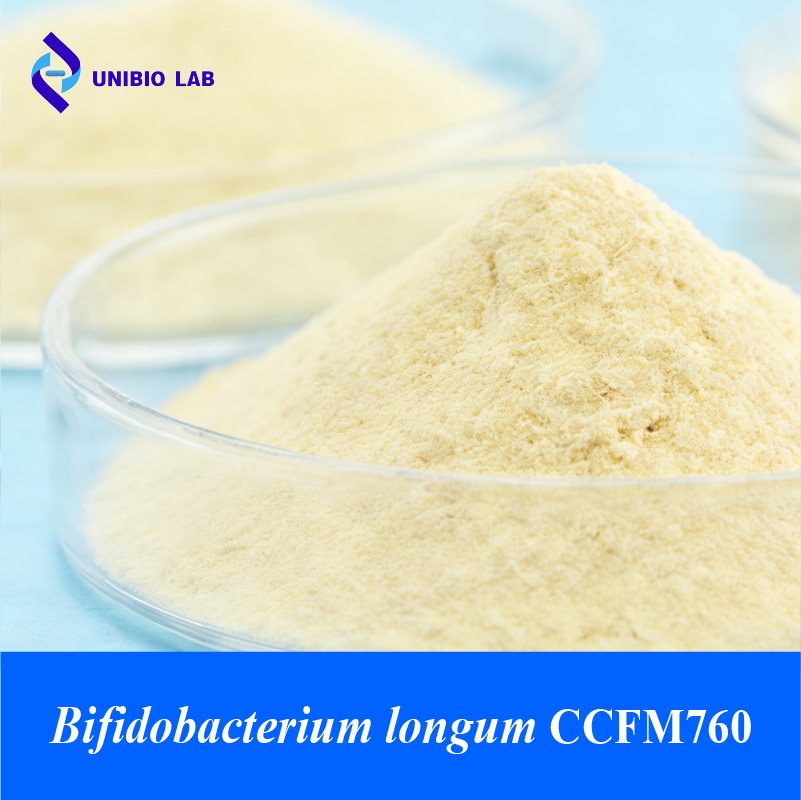
- Pet nutrition projects. Strains in the encapsulated portfolio are listed for pet health products and animal feed — Bifidobacterium animalis subsp. lactis BL03 (10B–600B CFU/g) and Bifidobacterium longum CCFM760 (10B–200B CFU/g) are both documented for animal feed applications. The global pet biotics market is estimated to reach USD 1,232.5 million by 2030, growing at a 7.0% CAGR (MarketsandMarkets), and pet nutrition buyers typically require the same documentation set — specification, COA and stability data — as human supplement buyers.
7. Comparison: VPro®-5L-COAT vs. Carrier-Only Powder
The table below compares the documented properties of VPro®-5L-COAT with a generic carrier-only powder — that is, a probiotic raw material consisting of strain plus carrier without an engineered multi-layer coating. Only the VPro® column carries platform-specific figures; where no equivalent figure exists in the reference material, the cell is marked as not documented rather than estimated.
| Criterion | VPro®-5L-COAT (5-layer encapsulated) | Carrier-only powder (no engineered multi-layer coating) |
|---|---|---|
| Barrier design | Five documented functional layers: micromolecular protective, prebiotic nutrition, liposome enteric adhesion, acid and enzyme resistant, oxygen and moisture barrier | No engineered multi-layer barrier documented; protection depends on the carrier matrix and packaging |
| Freeze-drying survival | Lifted by 40% at platform level | Not documented in the reference material |
| Stated shelf life | 24 months for encapsulated strains under recommended storage | Not documented in the reference material |
| Heat resistance | Documented as improved | Not documented in the reference material |
| Acid and bile resistance | 5-layer acid and bile resistant barrier | No dedicated acid and enzyme resistant layer documented |
| Storage classification | Room-temperature sealed storage for strains such as CCFM1195; other strains in the range remain 2°C–8°C or -18°C | Depends entirely on the individual strain specification |
| Primary application | Probiotic raw material factories, supplement manufacturers, food processing plants | Not applicable |
Two conclusions follow. First, the value of a five-layer coating is concentrated in the failure windows that a buyer cannot control downstream — warehouse humidity, long-haul transport and gastric transit. Second, encapsulation does not remove the need for strain-specific storage rules; it changes the range of processes and climates in which a given strain remains practical.
8. Frequently Asked Questions
Which certifications should a buyer verify when sourcing VPro®-encapsulated probiotic powder for regulated markets?
Shanghai Unibio Lab Co., Ltd holds ISO 22000, FSSC 22000 and GMP food manufacturing certification issued via SGS, HALAL and Orthodox Union (OU) Kosher certificates, and FDA US food facility registration. For US supplement sales, probiotic products are regulated under 21 CFR Part 111 and require compliance with current Good Manufacturing Practices (FDA / Eurofins); ISO 22000 is the international food safety management standard applicable to the probiotic production chain and incorporates HACCP principles. Every batch undergoes full internal laboratory testing covering viable count, heavy metals and microbial safety, and third-party SGS or Intertek inspection is supported on client request. Certification documents are reported to support customs clearance for North America, the EU, Southeast Asia, the Middle East, Australia and Japan.
What viable count and storage specifications can be set for a VPro®-encapsulated strain?
Specifications are set per strain. Documented examples in the encapsulated range include Bifidobacterium longum CCFM1195 and Bifidobacterium longum CCFM760 at 10B–200B CFU/g, Bacillus coagulans CCFM1041 (-39) and Lactobacillus rhamnosus GG at 10B–300B CFU/g, and Bifidobacterium animalis subsp. lactis BL03 at 10B–600B CFU/g. Storage instructions range from room-temperature sealed storage away from moisture and direct sunlight, to 2°C–8°C sealed cold storage, to sealed storage at -18°C or below, depending on the strain. At platform level, the VPro® process is documented to lift freeze-drying survival by 40%, extend shelf life to 24 months, and achieve fermentation density above 3.5×10¹⁰ CFU/mL with lyophilized powder concentration up to 8.0×10¹¹ CFU/g.
Which probiotic powder options fit pet nutrition projects?
Strains in the encapsulated portfolio are documented for pet health products and animal feed applications: Bifidobacterium animalis subsp. lactis BL03 at 10B–600B CFU/g and Bifidobacterium longum CCFM760 at 10B–200B CFU/g, both listed for animal feed, alongside Bacillus coagulans CCFM1041 (-39) at 10B–300B CFU/g. All three are supplied with VPro® 5-layer encapsulation material and carry a 24-month shelf life under recommended storage. The global pet biotics market is estimated to reach USD 1,232.5 million by 2030 at a 7.0% CAGR (MarketsandMarkets), and pet nutrition projects are supported through the same OEM, ODM and custom strain blending services as human supplement projects.
Can the coating be validated with a sample before committing to a bulk order?
Yes. Minimum order quantities are documented at 1 kg for single-strain raw powder and 5 kg for multi-strain compound powder, with 5,000 bottles as the minimum for private-label finished capsules or tablets. Sample-stage support includes free strain technical consultation, formulation optimization support and batch quality reports, so a buyer can test blending behaviour, fill weight and viable count before scaling. Customization options cover strain combination, CFU concentration, dosage form (powder, capsule, tablet, sachet, gummy), packaging design, brand logo printing, prebiotic and excipient formulation, and microencapsulation process adjustment.
What lead time and transport planning does an encapsulated raw powder order require?
Bulk raw material orders are documented at 5–7 days, and private-label finished product orders at 25–35 days, with FOB Shanghai, CIF, DDU and DDP terms available. Transport must be moisture-proof and light-proof, and storage must follow the strain-specific instruction — sealed, away from moisture and direct sunlight at room temperature for strains such as CCFM1195, or colder where the specification requires it. Supporting equipment includes low-temperature storage cabinets, vacuum packaging machines and powder mixing equipment. After-sales support includes cold chain logistics guidance and complaint resolution within 24 working hours.
9. Conclusion
VPro® 5-Layer Micro-Encapsulation is best understood as a set of five answers to five specific failure points: freezing during lyophilization, heat during processing, moisture and oxygen during storage, and acid and enzymes during digestion. For a buyer, the practical value is narrower and more useful than the marketing description — it is the ability to place a sensitive strain such as Bifidobacterium longum CCFM1195 into a room-temperature-stable, export-ready raw powder at 10B–200B CFU/g with a 24-month shelf life, while keeping the documentation required by ISO 22000, FSSC 22000, GMP, HALAL, Kosher and FDA-registered supply chains.
The specification work matters as much as the coating. Confirm the strain-level storage class, fix the CFU/g target and overage, match the storage equipment to the classification, and validate the format with a sample before bulk commitment. Done in that order, encapsulation becomes a measurable project parameter rather than an assumption.
Next step. To evaluate VPro®-5L-COAT against a specific strain, dosage form or market, request a sample and specification sheet, or download the full product brochure: Probiotics product brochure (PDF).
Shanghai Unibio Lab Co., Ltd — website: helplifes.com · Email: kevin@helplifes.com · WhatsApp: +86 158-2126-0907
Have Questions or Need More Details?
Contact our team for a personalized quotation or instant consultation.
Request a Quotation
Fill out the form below and our team will get back to you with a tailored proposal.
WhatsApp Direct Chat
Prefer to chat in real-time? Message us on WhatsApp for instant assistance & quick answers.
- Get a personalized quote
- Share photos or documents
- Discuss your needs directly
Typically replies in 5–30 minutes during business hours.