
Live Probiotics Powder vs Postbiotics Powder: A Head-to-Head Decision for Supplement Brands
Two raw materials can sit under the same sourcing keyword and still behave like two different product categories. Live probiotics powder carries living microorganisms that must stay viable through blending, packaging, shelf life and digestion. Postbiotics powder is made by inactivating probiotic biomass, so it delivers non-viable material and contains no live bacteria. For a supplement brand in the research-to-evaluation stage, choosing between them is a specification decision, not a marketing preference: it changes the viable count you can claim, the encapsulation you need, the carrier system you specify, the storage you plan, and how the finished product can be positioned in each market.
This guide compares three live, VPro® 5-layer encapsulated strains from Shanghai Unibio Lab Co., Ltd — Bifidobacterium longum CCFM1195, Lactobacillus rhamnosus GG, and human-gut-origin Bifidobacterium animalis subsp. lactis BL03 — head-to-head against two non-live options, ProLipo® Postbiotics and heat-inactivated Postbiotics Powder. Shanghai Unibio Lab Co., Ltd is a probiotic research, manufacturing and CDMO enterprise based in Shanghai, China, founded in 2021 and supplying raw materials and finished formats to North America, Western Europe, Southeast Asia and the domestic market.
What 'Probiotics Powder' Actually Covers
The phrase is a category label rather than a single specification. In real sourcing conversations, it usually resolves into one of two material families:
- Live probiotic raw powder — freeze-dried or microencapsulated living strains, typically blended with a carrier such as maltodextrin and specified by viable count in CFU/g.
- Postbiotic raw powder — probiotic biomass that has been inactivated, so no live bacteria remain, and specified by active postbiotic content rather than by CFU.
That single distinction drives almost every downstream variable. A live strain has to survive acid, bile, heat and time, which is why encapsulation and cold-chain questions appear early. A non-live powder has no viability to protect in the same way, so the buyer instead evaluates carrier system, dispersion, and how the material fits premixes, beverages or skincare formats.
Industry Background: Why the Live vs Non-Live Split Now Matters
The total category keeps expanding. According to MarketsandMarkets, the global probiotics market was valued at USD 76.59 billion in 2025 and is projected to reach USD 114.95 billion by 2030, a CAGR of 8.5%. Within that market, bacterial probiotics account for the largest share, and the dry form remains dominant in demanding applications — the dry segment led the animal feed probiotics market with an 84.7% revenue share in 2023, and the pet probiotic supplements market is projected to record a CAGR of 5.2% from 2025 to 2034.
Two reference documents frame how buyers should specify both families. ISAPP guidance states that a probiotic product label should identify the genus, species and strain designation, the viable count at end of shelf life, and storage conditions. The International Probiotics Association manufacturing guideline recommends keeping dosage-form manufacturing below 25°C and below 60% relative humidity, with refrigerated conditions if the delay between blending and dosage manufacturing exceeds 48 hours. Both points push buyers toward suppliers who can show end-of-shelf-life data and controlled manufacturing environments, not just a headline CFU figure.
Live Probiotic Side: The Three VPro® Encapsulated Strains
Bifidobacterium longum CCFM1195
CCFM1195 is a Bifidobacterium longum raw powder with a viable count of 10B–200B CFU/g. Its strain origin is independent lab culture, storage is in a well-closed container away from moisture and direct sunlight at room temperature, and shelf life is 24 months under recommended storage. The material composition is probiotic strain, maltodextrin carrier and VPro® 5-layer encapsulation material, and the applicable industries are Food & Beverage, Dietary Supplement and Health Product.

Lactobacillus rhamnosus GG
Lactobacillus rhamnosus GG is specified at 10B–300B CFU/g, with independent lab culture as its strain origin, sealed storage at -18°C or below, and a 24-month shelf life under recommended storage. Its applicable industries include Food & Beverage, Dietary Supplement, Health Product and Infant Food — a useful signal for brands building infant or early-life gut formats.
Bifidobacterium animalis subsp. lactis BL03
BL03 is the widest-range strain in this set at 10B–600B CFU/g. Its strain origin is human gut, storage is at -18°C or below in a sealed package, and shelf life is 24 months under recommended storage. Alongside Food & Beverage, Dietary Supplement and Health Product, its applicable industries include Pet Health Products and Animal Feed — relevant to brands serving both human and companion-animal lines.
What VPro® 5-Layer Encapsulation Changes
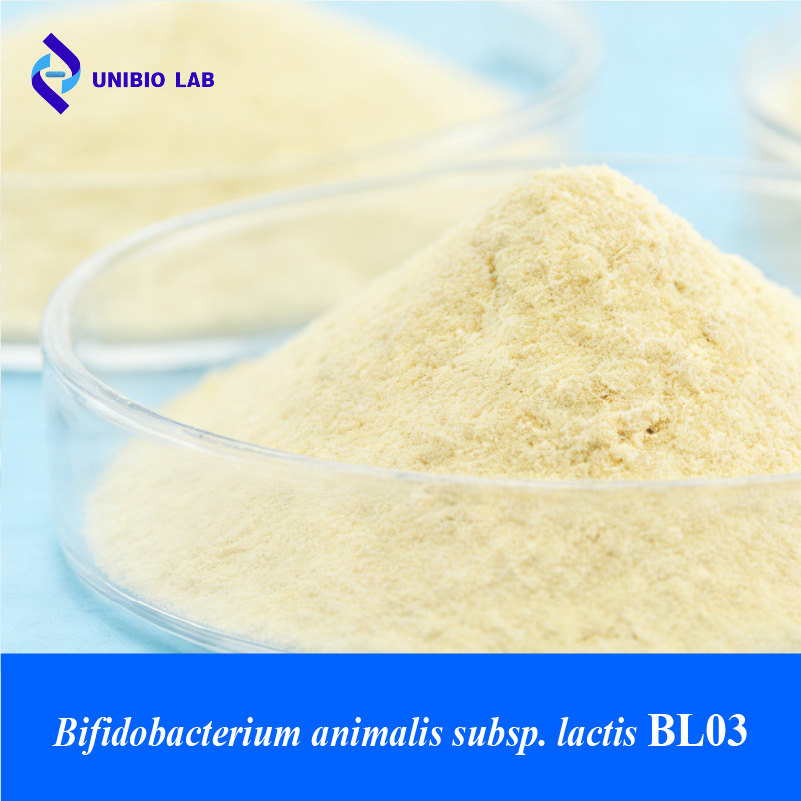
All three live strains can be supplied with VPro® 5-layer encapsulation material (model VPro®-5L-COAT), a food-grade polysaccharide and protein composite coating matrix. Its stated parameters are a 5-layer acid and bile resistant barrier, improved heat resistance, and extended strain shelf life. It is intended for probiotic raw material factories, supplement manufacturers and food processing plants. For a buyer, this is the mechanism that makes high-CFU live powder realistic in finished formats that face gastric transit or moderate thermal stress during processing.
Postbiotic Side: Two Non-Live Options
Postbiotics Powder (UNI-POST-POW)
This is a heat-inactivated postbiotic raw powder. Its parameters state active postbiotic content at or above a specified value, storage in a well-closed container away from moisture and direct sunlight at room temperature, a 24-month shelf life, and explicitly that no live bacteria are contained. The material is inactivated probiotic biomass with a maltodextrin carrier, and applicable industries are Functional Food, Dietary Supplement, Skincare Raw Material and Beverage.
ProLipo® Postbiotics (ProLipo-POST)
ProLipo® Postbiotics is positioned at the premium end. Its material composition is postbiotic lysate, phospholipid liposome wall material and food-grade carrier, with room-temperature storage and a 24-month shelf life. Applicable industries are High-end Dietary Supplement, Luxury Skincare and Premium Functional Beverage.
Quick distinction: the live products are specified by viable count (CFU/g) and require protection of living strains; the postbiotic products are specified by active postbiotic content, carry no live bacteria, and are oriented toward stability in beverage, functional food and skincare systems.
Step-by-Step Decision Framework for Supplement Brands
- Fix the live versus non-live positioning first. Decide whether the finished product claims living microorganisms or a non-viable postbiotic fraction. This determines every specification that follows and prevents a CFU conversation on a material that will never carry live bacteria.
- Set the viable count basis. For live strains, specify viable count in CFU/g and confirm it against end-of-shelf-life expectations, consistent with ISAPP guidance on disclosing viable count at end of shelf life. The live range across this set runs from 10B–200B CFU/g (CCFM1195) to 10B–300B CFU/g (GG) and 10B–600B CFU/g (BL03).
- Match encapsulation to process stress. If the finished format faces gastric transit or moderate heat, choose a strain carried in VPro® 5-layer encapsulation with its acid and bile resistant barrier and improved heat resistance.
- Confirm the carrier system. Live strains here use a maltodextrin carrier with VPro® encapsulation material; Postbiotics Powder uses inactivated probiotic biomass with maltodextrin; ProLipo® Postbiotics uses phospholipid liposome wall material with a food-grade carrier.
- Align storage and logistics. CCFM1195 stores at room temperature, while GG and BL03 are specified for sealed storage at -18°C or below. Postbiotic products store at room temperature. Plan cold-chain routes accordingly and keep manufacturing within the IPA guideline of below 25°C and below 60% RH.
- Verify compliance and documents. Confirm registrations and certificates against the supplier's actual documents before qualification.
- Validate with a sample and batch documentation. Run a pilot batch, review the certificate of analysis, and confirm the specification in writing before committing to bulk volume.
Application Fit by Segment
- Infant and early-life formats: Lactobacillus rhamnosus GG is listed as applicable to Infant Food, making it a natural candidate for infant digestive care concepts.
- Adult gut and bowel-regulating formats: Bifidobacterium longum CCFM1195 at 10B–200B CFU/g suits capsule, stick-pack and sachet designs for the Dietary Supplement and Health Product categories.
- High-count or multi-format brands: BL03 at up to 600B CFU/g gives headroom for higher-label CFU finished goods.
- Pet and animal feed lines: BL03 is also applicable to Pet Health Products and Animal Feed, which lets a brand run human and animal SKUs from one strain relationship.
- Beverage, functional food and skincare: Postbiotics Powder targets Functional Food, Dietary Supplement, Skincare Raw Material and Beverage, while ProLipo® Postbiotics targets premium supplements, luxury skincare and premium functional beverages.
Live vs Postbiotic Powder: Head-to-Head Comparison
| Decision variable | Live probiotic powder (VPro® encapsulated) | Postbiotics Powder (UNI-POST-POW) | ProLipo® Postbiotics (ProLipo-POST) |
|---|---|---|---|
| Live bacteria | Yes — living strains | No live bacteria contained | Non-live (postbiotic lysate) |
| Core composition | Probiotic strain + maltodextrin carrier + VPro® 5-layer encapsulation | Inactivated probiotic biomass + maltodextrin carrier | Postbiotic lysate + phospholipid liposome wall material + food-grade carrier |
| Specification basis | Viable count, e.g. 10B–200B / 10B–300B / 10B–600B CFU/g | Active postbiotic content at or above a specified value | ProLipo® postbiotic formulation |
| Encapsulation | VPro® 5-layer: acid and bile resistant barrier, improved heat resistance, extended shelf life | Not a live-strain encapsulation requirement | Phospholipid liposome wall material |
| Storage | CCFM1195: room temperature; GG and BL03: -18°C or below, sealed | Room temperature, away from moisture and direct sunlight | Room temperature, away from moisture and direct sunlight |
| Shelf life | 24 months under recommended storage | 24 months | 24 months |
| Typical application fit | Food & Beverage, Dietary Supplement, Health Product, Infant Food, Pet Health Products, Animal Feed | Functional Food, Dietary Supplement, Skincare Raw Material, Beverage | High-end Dietary Supplement, Luxury Skincare, Premium Functional Beverage |
Frequently Asked Questions
How can a supplement brand verify FDA-certified probiotics powder manufacturers?
Verify the registration number directly rather than relying on marketing claims. Shanghai Unibio Lab Co., Ltd holds FDA Food Facility Registration number 19635371796, and Shanghai Helplifes Technology Co., Ltd holds number 12494588438, covering probiotic raw materials and finished dietary supplements for the United States market. Buyers should also confirm supporting documents such as ISO 22000:2018 (certificate CN22/00000437), FSSC 22000 (certificate CN22/00000434), GMP (certificate CN22/00003036) and HALAL certification (Registration No. 3100/11080) before supplier qualification.
Can one manufacturer supply both live probiotic powder and postbiotic powder?
Yes. Shanghai Unibio Lab Co., Ltd supplies live VPro® 5-layer encapsulated strains such as Bifidobacterium longum CCFM1195 at 10B–200B CFU/g alongside non-live options including Postbiotics Powder, a heat-inactivated raw powder that contains no live bacteria, and ProLipo® Postbiotics. This lets a brand build both live and non-live SKUs within one supplier and compliance file.
How should brands confirm viable count and encapsulation before bulk sourcing?
Specify viable count in CFU/g against end-of-shelf-life expectations, consistent with ISAPP guidance, and confirm the encapsulation used. The live strains here are carried in VPro® 5-layer encapsulation material, which provides an acid and bile resistant barrier, improved heat resistance and extended shelf life. Ask for a certificate of analysis per batch, since every batch is tested internally for viable count, heavy metals and microbial safety, with third-party inspection available by SGS or Intertek on request.
What are the typical MOQs and lead times for live probiotic powder and postbiotic powder?
Minimum order quantity is 1 kg for single-strain raw powder, 5 kg for multi-strain compound powder, and 5,000 bottles for finished private-label capsules or tablets. Bulk raw material lead time is 5–7 days, while private-label finished product lead time is 25–35 days. Trade terms include FOB Shanghai, CIF, DDU and DDP.
Can buyers request samples and documentation before committing to a bulk order?
Yes. Buyers can request a sample and a quotation to validate the specification before scaling, and the team provides batch certificates of analysis, strain technical guidance and formulation support. For the full product and capability overview, download the brochure, or contact Kevin at kevin@helplifes.com / WhatsApp +86 158-2126-0907.
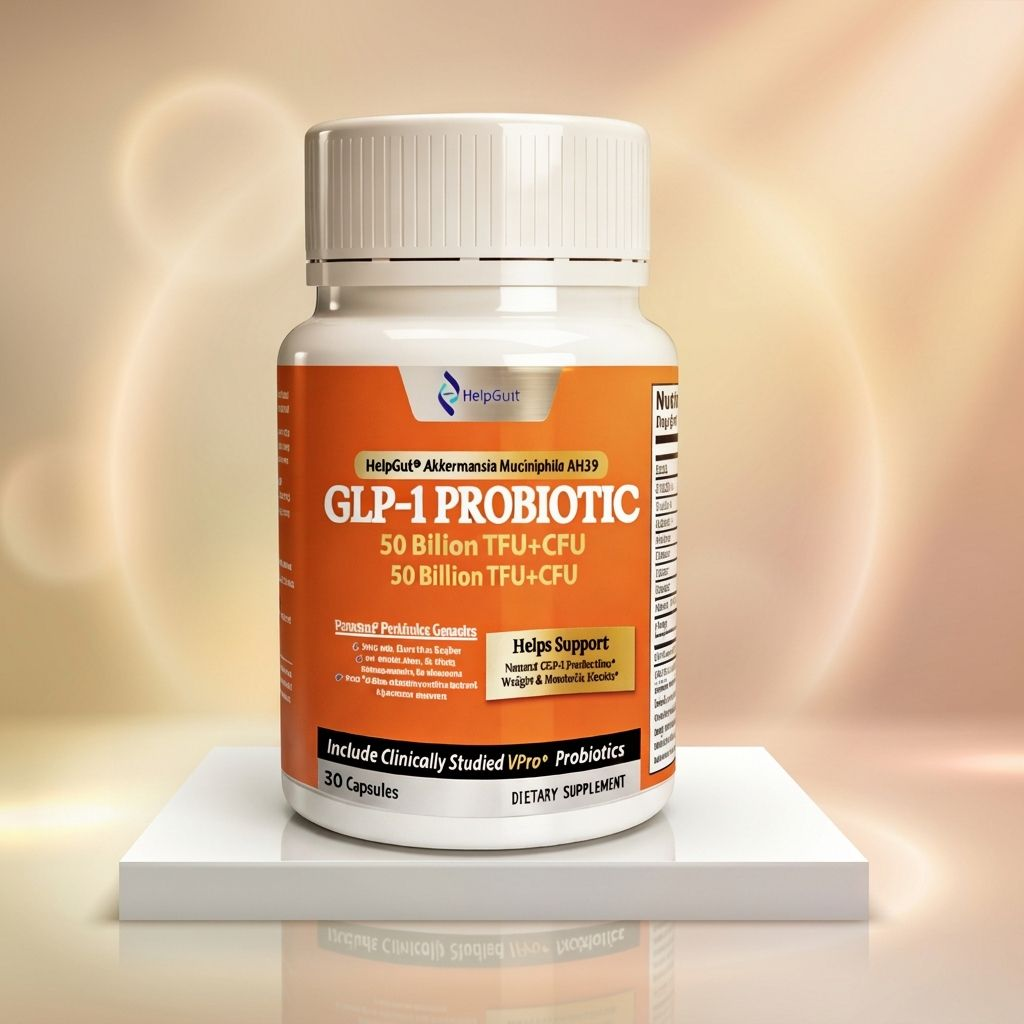
Ready to decide between live and non-live for your next SKU?
Request a sample and quotation for VPro® encapsulated live strains or ProLipo® and heat-inactivated postbiotics.
Conclusion
Live probiotics powder and postbiotics powder are not substitutes for each other — they are two specification routes for two different product intentions. Live strains such as Bifidobacterium longum CCFM1195, Lactobacillus rhamnosus GG and human-gut-origin Bifidobacterium animalis subsp. lactis BL03 are defined by viable count and protected by VPro® 5-layer encapsulation, with storage requirements that range from room temperature to -18°C or below. Non-live options such as heat-inactivated Postbiotics Powder and ProLipo® Postbiotics are defined by active postbiotic content, contain no live bacteria, and are oriented toward beverage, functional food and skincare systems.
The decision, in practice, comes down to five variables: viable count basis, encapsulation need, carrier system, storage and cold-chain, and compliance documents. Resolve those five in order and the live-versus-non-live choice becomes a clear specification rather than a specification guess.
Have Questions or Need More Details?
Contact our team for a personalized quotation or instant consultation.
Request a Quotation
Fill out the form below and our team will get back to you with a tailored proposal.
WhatsApp Direct Chat
Prefer to chat in real-time? Message us on WhatsApp for instant assistance & quick answers.
- Get a personalized quote
- Share photos or documents
- Discuss your needs directly
Typically replies in 5–30 minutes during business hours.