
Probiotics Powder Losing Potency in Capsules? VPro® 5-Layer Encapsulation Explained
Probiotics powder can lose viable count in capsules when the strain is exposed to moisture, oxygen, heat, gastric acid, or bile before it reaches the gut. VPro® 5-Layer encapsulation is a protective coating route for brands that need to hold viable count through storage and capsule delivery. Shanghai Unibio Lab Co., Ltd, a probiotic R&D, manufacturing and CDMO enterprise based in Shanghai, China, supplies the VPro®-5L-COAT material and encapsulated probiotic raw powders for capsule, sachet, tablet and powder projects.
The practical question is not whether a powder has a high CFU number on the day it is produced. The harder question is whether that viable count is still credible at the end of shelf life and after the capsule has passed through the stomach. This article explains the potency-loss problem, the five-layer protection mechanism, the strain options that fit capsule projects, and when a postbiotic route is the better formulation choice.
Problem definition: where capsule potency goes wrong
A capsule is a delivery format, not a protective shield by itself. Probiotic powder inside a capsule still sits inside a moisture and oxygen environment, and it still has to survive gastric digestion after swallowing. For formulators, potency loss is therefore a chain of stress points rather than a single event.
- Storage stress: temperature, humidity and oxygen exposure can reduce viable count before the product is opened.
- Processing stress: blending, filling and filling-room delays can expose powder to conditions that are not ideal for live strains.
- Gastric stress: acid and bile can reduce the number of viable cells that reach the intestinal tract.
- Freeze-drying stress: the drying step itself can damage strain structure if the culture is not protected.
The International Probiotics Association manufacturing guideline is a useful reference point for the processing side. It recommends keeping probiotic dosage-form manufacturing below 25°C and below 60% relative humidity where acceptable, with tighter refrigerated conditions if the delay between blending and dosage manufacturing exceeds 48 hours. That guidance underlines a simple point: viable count is affected by the whole production and storage chain, not only by the raw material specification.
The International Scientific Association for Probiotics and Prebiotics also advises that a probiotic product label should identify genus, species, strain designation, viable count at the end of shelf life, and storage conditions. For a capsule brand, that means the meaningful target is not an initial production figure alone. It is the labeled viable count at the end of shelf life, supported by a strain identity and a documented storage regime.
Industry background: why potency protection is a commercial issue
The global probiotics market was valued at USD 76.59 billion in 2025 and is projected to reach USD 114.95 billion by 2030, growing at a CAGR of 8.5%, according to MarketsandMarkets. Bacterial probiotics account for the largest share of that market, driven by widespread use in dietary supplements. Within animal feed probiotics, the dry form segment, which includes powders, held an 84.7% revenue share in 2023.
Those figures matter because they show that powder-based formats are not a niche. They are central to supplement, food and feed applications. But market growth also raises the bar for formulation discipline: more products mean more labels, more shelf-life claims and more buyer scrutiny of viable count at the end of shelf life.
For capsule projects, the manufacturing environment is part of the product. A powder that is protected in the coating but handled in a warm, humid filling room can still lose performance. A powder that is stable in bulk but packed without moisture and light protection can still drift during distribution. The solution therefore has to combine strain selection, protective coating, documented storage conditions and batch-level quality control.
Detailed solution: what VPro® 5-Layer encapsulation does
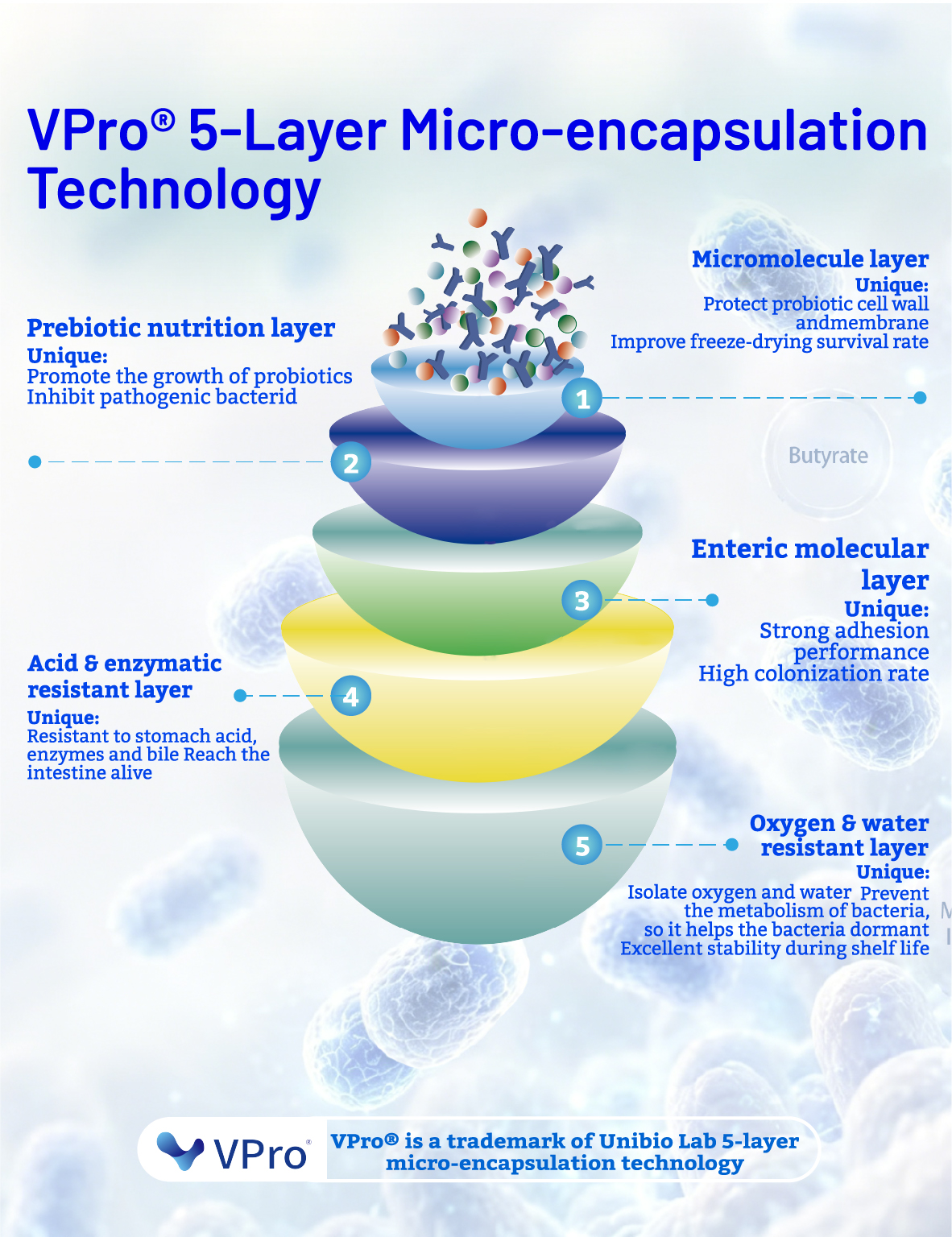
VPro® 5-layer micro-encapsulated probiotics material, model VPro®-5L-COAT, is a protective coating material made from a food-grade polysaccharide and protein composite coating matrix. Its stated performance attributes are a five-layer acid and bile resistant barrier, improved heat resistance, and extended strain shelf life. It is intended for probiotic raw material factories, supplement manufacturers and food processing plants.
The five functional layers
- Micromolecular protective layer: anti-freezing and anti-stress protection during freeze-drying and handling.
- Prebiotic nutrition layer: supports in-vivo proliferation after delivery.
- Liposome enteric adhesion layer: supports intestinal colonization.
- Acid and enzyme resistant layer: helps the strain survive gastric digestion.
- Oxygen and moisture barrier layer: extends shelf stability.
Shanghai Unibio Lab reports that the platform lifts freeze-drying survival rate by 40%, extends shelf life to 24 months, and reaches fermentation density above 3.5×10¹⁰ CFU/mL with lyophilized powder concentration up to 8.0×10¹¹ CFU/g. These are platform-level figures; the final specification for a capsule project still depends on the selected strain, target CFU, carrier, capsule shell, packaging and storage conditions.
Strain examples for capsule projects
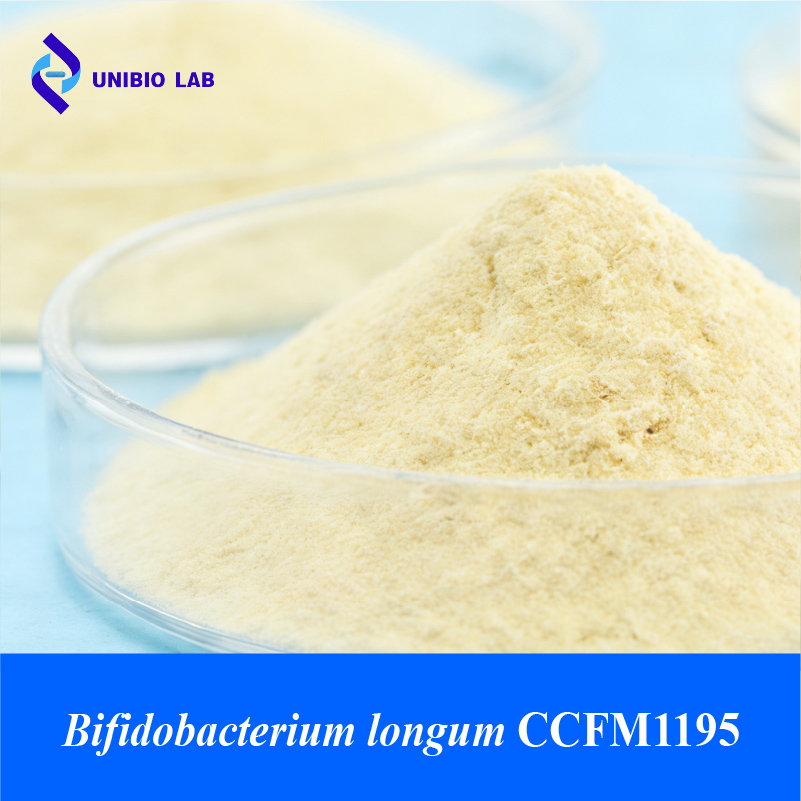
Bifidobacterium longum CCFM1195 is a Bifidobacterium longum raw powder supplied at 10B–200B CFU/g with a maltodextrin carrier and VPro® 5-layer encapsulation material. Its recommended storage is a well-closed container away from moisture and direct sunlight at room temperature, with a shelf life of 24 months under recommended storage.
Lactobacillus rhamnosus GG is supplied at 10B–300B CFU/g with a maltodextrin carrier and VPro® 5-layer encapsulation material. Its recommended storage is a sealed package at -18°C or below, with a shelf life of 24 months under recommended storage. It is positioned for food and beverage, dietary supplement, health product and infant food applications.
Lactobacillus plantarum HP59 is supplied at 10B–200B CFU/g with a maltodextrin carrier and VPro® 5-layer encapsulation material. Its recommended storage is 2°C–8°C sealed cold storage, with a shelf life of 24 months under recommended storage. It is applicable to food and beverage, dietary supplement and fermented food projects.

When live bacteria are not the right route
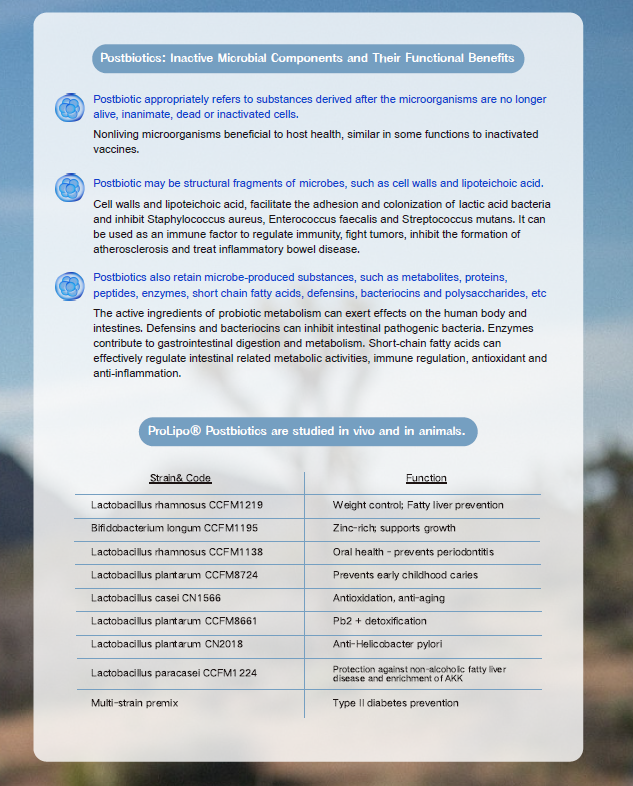
Not every capsule project requires live bacteria. For brands that need a non-viable route, Shanghai Unibio Lab offers ProLipo® Postbiotics and heat-inactivated Postbiotics Powder (UNI-POST-POW) as complementary options. Postbiotics Powder contains no live bacteria, has a shelf life of 24 months under recommended storage, and is made from inactivated probiotic biomass with a maltodextrin carrier. ProLipo® Postbiotics use postbiotic lysate with a phospholipid liposome wall material and food-grade carrier, also with a 24-month shelf life under recommended storage.
Step-by-step breakdown: specifying VPro® in a capsule project
- Set the viable count target at the end of shelf life. Start with the label claim, not the production CFU. Decide the strain, the target CFU per capsule, and the storage conditions that will be printed on the pack.
- Match the strain to the application. For room-temperature handling, Bifidobacterium longum CCFM1195 is specified with room-temperature storage in a well-closed container. For a cold-chain project, Lactobacillus plantarum HP59 is specified at 2°C–8°C. For a frozen bulk route, Lactobacillus rhamnosus GG is specified at -18°C or below.
- Select the protective material. Use VPro®-5L-COAT where the formula needs a five-layer acid and bile resistant barrier, improved heat resistance and extended strain shelf life. Confirm that the selected strain is supplied with the VPro® 5-layer encapsulation material in the specification.
- Control filling and packaging. The powder should be processed in an indoor production environment for downstream manufacturers and packed to protect against moisture and light. Storage requirements vary by strain, so the batch COA and product label should be followed rather than a single warehouse rule for all strains.
- Confirm documentation before scale-up. Ask for strain identity, viable count, carrier, encapsulation route, storage conditions, shelf life and batch COA. Where required, request third-party inspection by SGS or Intertek.
- Validate commercial terms. Shanghai Unibio Lab lists a minimum order of 1 kg for single-strain raw powder, 5 kg for multi-strain compound powder, and 5,000 bottles for HelpGut private-label finished capsules or tablets. Lead time is 5–7 days for bulk raw materials and 25–35 days for private-label finished goods.
Use cases: where the five-layer route fits
Pet nutrition probiotics powder
Pet nutrition projects can use strains listed for pet health products and animal feed, including Bifidobacterium animalis subsp. lactis BL03 at 10B–600B CFU/g and Bifidobacterium longum CCFM760. These are raw powder options with maltodextrin carrier and VPro® 5-layer encapsulation material. For a pet supplement brand, the key specification question is whether the strain, CFU and storage route match the finished product format and the market's labeling requirements.
Infant and adult gut formulas
Lactobacillus rhamnosus GG is positioned for infant food, dietary supplement and health product applications, while Bifidobacterium longum CCFM1195 is a Bifidobacterium longum option for capsule and powder projects. Adult gut formulas can also use Lactobacillus plantarum HP59 where a cold-stored Lactobacillus plantarum strain is acceptable. The common thread is not a single health claim; it is the need to preserve viable count through the declared shelf life.
Bowel regulating and immunity formulas
For bowel regulating and immunity-focused projects, strain selection should follow the intended application and the available strain documentation. Bifidobacterium longum CCFM1195, Lactobacillus rhamnosus GG and Lactobacillus plantarum HP59 are examples of strains supplied with VPro® 5-layer encapsulation material. The encapsulation route is relevant because it addresses acid, bile, oxygen and moisture stress, which sit between the raw powder and the intended intestinal delivery.
Sports nutrition and elderly formulas
Sports nutrition and elderly formulas often use capsule or sachet formats that depend on shelf-life consistency. The formulation team should confirm the strain's storage class before choosing a room-temperature or cold-chain distribution model. Bifidobacterium longum CCFM1195 is specified for room-temperature storage in a well-closed container, while Lactobacillus plantarum HP59 is specified for 2°C–8°C storage. That difference affects packaging, warehousing and e-commerce fulfillment.
Livestock and animal feed
Animal feed projects can evaluate Bacillus coagulans CCFM1041 at 10B–300B CFU/g, which is listed for animal feed as well as food and dietary supplement applications. Bifidobacterium animalis subsp. lactis BL03 and Bifidobacterium longum CCFM760 are also listed for pet health products or animal feed. For livestock and feed applications, the powder format, heat exposure during feed processing and storage humidity are practical specification variables.
Comparison table: live encapsulated powder vs postbiotic alternatives
| Material | Core composition | Protection or handling fact | Live bacteria | Typical project fit |
|---|---|---|---|---|
| VPro® 5-layer micro-encapsulated probiotics material (VPro®-5L-COAT) | Food-grade polysaccharide and protein composite coating matrix | Five-layer acid and bile resistant barrier; improved heat resistance; extends strain shelf life | Yes, when used with live probiotic strains | Capsule, sachet, tablet and powder projects that need viable-count protection |
| Postbiotics Powder (UNI-POST-POW) | Inactivated probiotic biomass and maltodextrin carrier | No live bacteria; 24-month shelf life under recommended storage | No | Functional food, dietary supplement, beverage and skincare raw material projects |
| ProLipo® Postbiotics (ProLipo-POST) | Postbiotic lysate, phospholipid liposome wall material and food-grade carrier | 24-month shelf life under recommended storage | No | High-end dietary supplement, premium functional beverage and luxury skincare projects |
The table is not a ranking. It is a formulation routing tool. Live probiotic capsules need a viable-count strategy; postbiotic formats remove the live-cell variable but change the label and formulation story. The right choice depends on the product claim, the target market and the manufacturing route.
FAQ
What causes probiotics powder to lose potency inside capsules?
Probiotics powder can lose potency through moisture, oxygen, heat, freeze-drying stress, gastric acid and bile exposure. The International Probiotics Association guideline also links manufacturing temperature and humidity control to probiotic dosage-form handling, with tighter refrigerated conditions when the delay between blending and dosage manufacturing exceeds 48 hours.
How does VPro® 5-Layer encapsulation protect Bifidobacterium longum CCFM1195?
Bifidobacterium longum CCFM1195 is supplied at 10B–200B CFU/g with a maltodextrin carrier and VPro® 5-layer encapsulation material. The VPro®-5L-COAT route provides a five-layer acid and bile resistant barrier, improved heat resistance and extended strain shelf life. The strain is specified for storage in a well-closed container away from moisture and direct sunlight at room temperature, with a 24-month shelf life under recommended storage.
Can Shanghai Unibio Lab supply probiotics powder for pet nutrition projects?
Yes. Shanghai Unibio Lab lists pet health and animal feed applications for strains such as Bifidobacterium animalis subsp. lactis BL03 at 10B–600B CFU/g and Bifidobacterium longum CCFM760. These are supplied as probiotic raw powders with maltodextrin carrier and VPro® 5-layer encapsulation material. The project specification should confirm the target strain, CFU, storage condition, capsule or powder format, and destination-market labeling requirements.
Which certifications and batch documents support capsule-use probiotics powder?
Shanghai Unibio Lab holds ISO 22000, FSSC 22000, GMP food manufacturing certification from SGS, HALAL and Orthodox Union Kosher certificates, and FDA U.S. food facility registration. Every batch undergoes internal lab testing for viable count, heavy metals and microbial safety, and third-party SGS or Intertek inspection can be requested.
What are the MOQ and lead time for VPro® powder and private-label capsules?
The listed minimum order is 1 kg for single-strain raw powder, 5 kg for multi-strain compound powder, and 5,000 bottles for HelpGut private-label finished capsules or tablets. Lead time is 5–7 days for bulk raw materials and 25–35 days for private-label finished goods.
How can a brand request a sample or quote?
Contact Shanghai Unibio Lab with the target strain, CFU per capsule or gram, dosage form, storage condition and destination market. The team can advise on VPro®-5L-COAT, strain options such as Bifidobacterium longum CCFM1195, Lactobacillus rhamnosus GG or Lactobacillus plantarum HP59, and postbiotic alternatives where live bacteria are not required. Sample and quote requests can be sent to kevin@helplifes.com or WhatsApp +86 158-2126-0907.
Conclusion
Probiotics powder losing potency in capsules is a formulation and handling problem, not a single raw-material defect. VPro® 5-Layer encapsulation addresses the stress points that matter for live probiotic capsule projects: acid, bile, oxygen, moisture, heat and freeze-drying damage. The result is a protective route that supports strain survival and shelf-life planning when it is matched with the right strain, storage class and batch documentation.
For brands comparing options, the practical next step is to define the end-of-shelf-life CFU target, choose a strain with a documented storage profile, confirm the VPro®-5L-COAT specification, and review the MOQ and lead time against the launch plan. Where live bacteria are not required, Postbiotics Powder (UNI-POST-POW) and ProLipo® Postbiotics provide complementary non-viable routes.
Next step: evaluate the right route for your capsule project
Contact Shanghai Unibio Lab Co., Ltd for a sample, quote or technical discussion. Email: kevin@helplifes.com. Tel: +86 135-1234-4323. WhatsApp: +86 158-2126-0907. Address: B706-709, No.628 Huaxu Road, Xujing Town, Qingpu District, Shanghai, P.R.China.
This article is for B2B formulation and procurement discussion. Product specifications, storage conditions and regulatory requirements should be confirmed against the current batch COA and destination-market rules before commercialization.
Have Questions or Need More Details?
Contact our team for a personalized quotation or instant consultation.
Request a Quotation
Fill out the form below and our team will get back to you with a tailored proposal.
WhatsApp Direct Chat
Prefer to chat in real-time? Message us on WhatsApp for instant assistance & quick answers.
- Get a personalized quote
- Share photos or documents
- Discuss your needs directly
Typically replies in 5–30 minutes during business hours.