
Top 10 Probiotics Powder Strains for Metabolic and Digestive Health in 2026
Top 10 Probiotics Powder Strains for Metabolic and Digestive Health in 2026
Choosing a probiotic powder in 2026 is a strain-level decision, not a species-level one. Two suppliers can both ship Bifidobacterium and still deliver completely different functional behaviour, viable counts and storage requirements, because metabolic and digestive effects are documented per strain rather than per genus.
This guide ranks ten documented strains from the Shanghai Unibio Lab Co., Ltd strain portfolio that are positioned for metabolic management and digestive health formulations. Each entry states the strain code, the deliverable viable count range, the storage condition, the shelf life and the microencapsulation technology applied, so a formulator can move from a functional brief to a defensible shortlist in a single pass.
Transparency note: this is an editorial ranking of one manufacturer's verified strain list against the four criteria set out below. It is not an independent market ranking of global probiotic brands, and it does not replace sample validation in your own matrix.
Problem Definition: Why "Gut Health" Is Not a Strain Specification
A functional brief that says "digestive health capsule, 20 billion CFU" is not specific enough to select a raw material against. Three variables separate a strain that survives the project from one that does not, and all three are decided before the first sample is ordered.
- Delivered count versus label count. The viable count range of a raw powder must be high enough to absorb the losses caused by blending, tableting, filling, packaging and shelf-life decay. A strain whose powder tops out at a low count forces either a heavier dose per serving or a weaker label claim.
- Storage class. Strains in the same portfolio can require −18 °C storage, 2–8 °C sealed cold storage, or ambient room-temperature storage. A cold-chain strain changes the cost structure of the finished product long before it reaches the consumer.
- Encapsulation route. Gastric acid, bile salts, oxygen and freeze-drying stress all reduce the count that actually reaches the intestine. Protective embedding is a formulation decision, not a marketing attribute.
Add regulatory documentation to that list. A metabolic claim in the United States, a Muslim-majority market requirement, or an EU food-safety audit each demand a different paper trail, and the paper trail must exist at the strain level, not only at the factory level.
Industry Background: What Formulators Are Working With in 2026
The commercial context behind strain selection has been expanding steadily. According to Global Market Insights, the global probiotics market was valued at USD 72.1 billion in 2024 and is projected to reach USD 165.1 billion by 2034. Within that total, MarketsandMarkets reports that probiotic dietary supplements alone reached a market size of USD 10.60 billion in 2026, with a forecast CAGR of 9.5% through 2031.
Published market sizes do diverge by source scope. For 2025 alone, Grand View Research estimated the total market at USD 114.0 billion while Global Market Insights reported USD 79.2 billion. The gap is largely definitional — what is counted as a probiotic product versus a probiotic ingredient — which is one reason buyers should treat any single market figure as directional rather than exact.
Regulation is more settled than market sizing. In the United States, probiotic supplements are regulated under 21 CFR Part 111, requiring compliance with current Good Manufacturing Practices (cGMP). Internationally, ISO 22000 is the food safety management system standard applicable to the probiotic production chain, incorporating HACCP principles. On the technical side, microencapsulation using materials such as alginate or chitosan is widely described in the research literature as a key trend for improving probiotic viability through gastric acid and bile salts.
Manufacturing capability determines how these trends translate into a purchasable raw material. Shanghai Unibio Lab Co., Ltd, founded in 2021 and built on 40+ years of probiotic research originating from Jiangnan University, operates a strain bank of more than 30,000 microbial strains — including 25,300 primary 16S rRNA strains, 13,720 draft-genome strains and 8,046 full-genome strains — and holds 189 patented functional strains grouped across gut health, metabolic management, immune regulation and next-generation probiotics. Annual output reaches 1,800 tons of probiotic raw powder and postbiotics. Its self-developed VPro® five-layer embedding technology lifts the freeze-drying survival rate by 40%, extends shelf life to 24 months, and supports fermentation density above 3.5×10¹⁰ CFU/mL with lyophilized powder concentration up to 8.0×10¹¹ CFU/g.
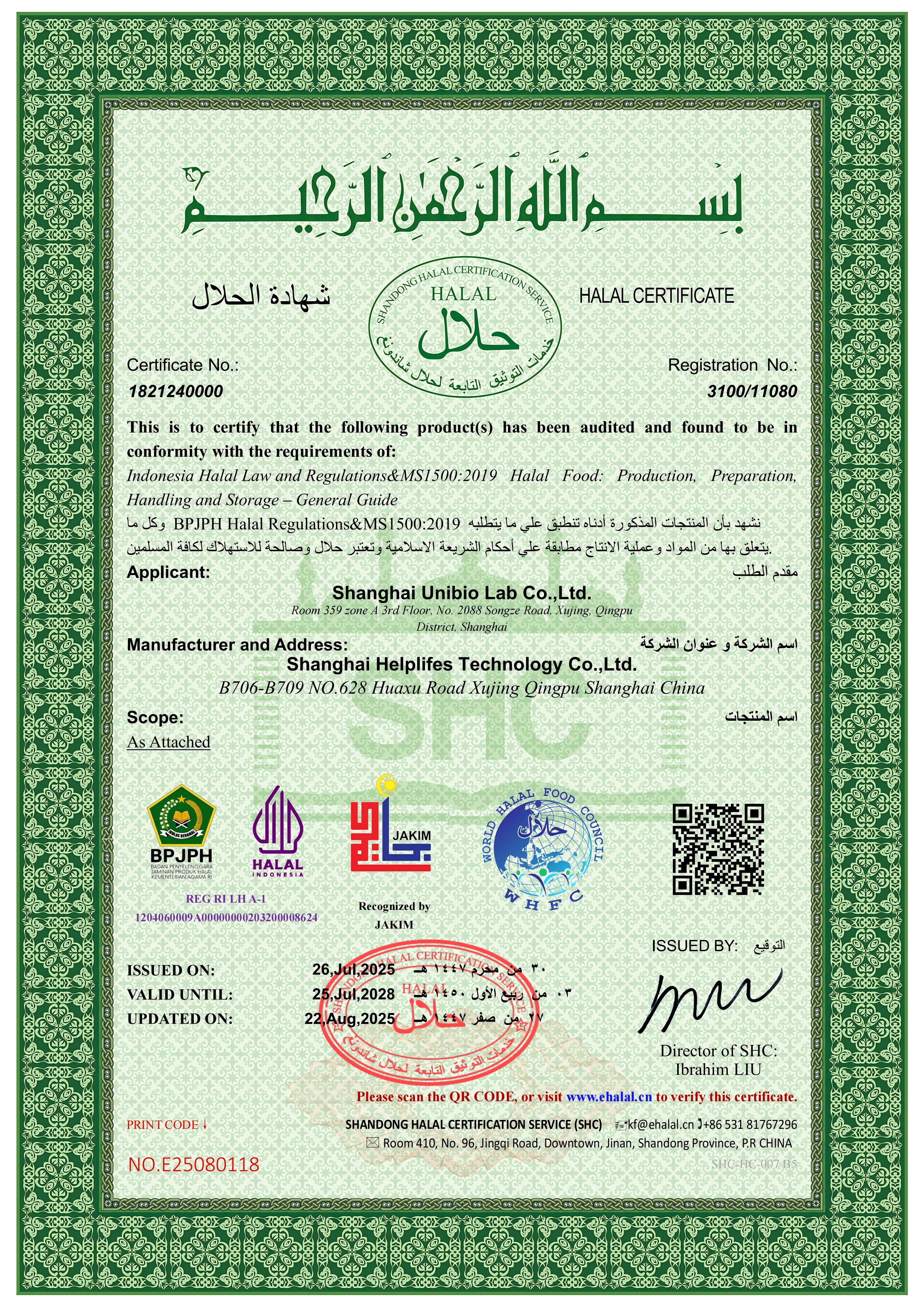
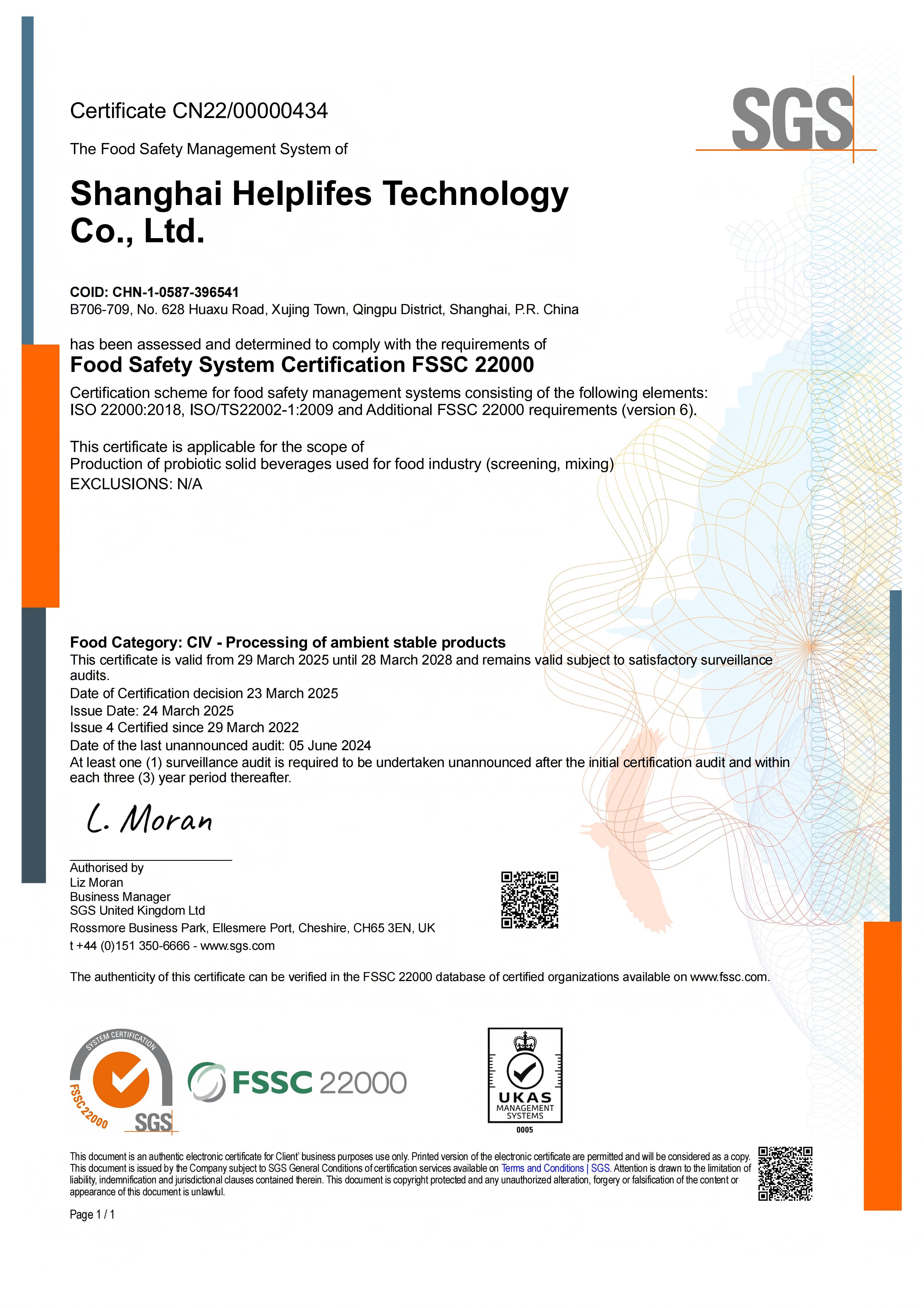
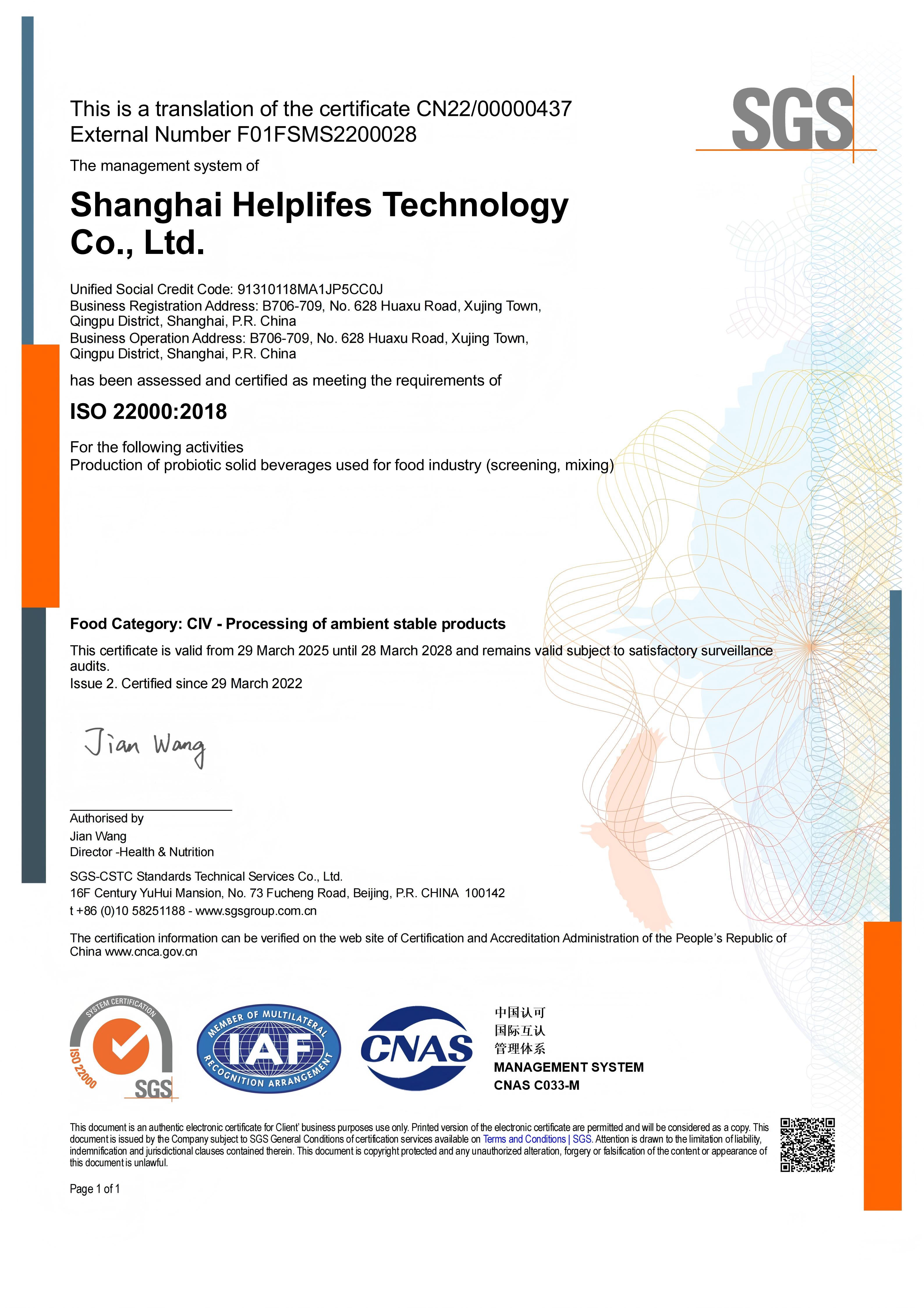
Compliance documentation at the company level includes ISO 22000 (certificate CN22/00000437, valid to 28 March 2028), FSSC 22000 Version 6 (CN22/00000434), GMP certification against Codex Alimentarius principles (CN22/00003036), HALAL certification under MS 1500:2019 and Indonesian Halal Law (Registration No. 3100/11080; Certificate No. 1821240000, valid to 25 July 2028), OU Kosher certification, and US FDA food facility registration No. 19635371796 for Shanghai Unibio Lab Co., Ltd. Each batch undergoes in-house viable count, microbial safety and heavy metal testing, with third-party SGS or Intertek inspection available on request.
How the Top 10 Was Ranked: Four Selection Criteria
Every strain below had to satisfy the same four tests. They are also the four questions a formulator can put to any supplier, not only to this one.
- Documented function relevance. The strain must be associated with a metabolic or digestive endpoint — GLP-1 secretion, butyrate production, mucus-layer support, bowel regularity, intestinal metabolism, or the gut-brain axis. Species-level familiarity was not accepted as evidence of function.
- Deliverable viable count range. The specification must state a raw-powder count range that can support a commercial label claim after processing losses. Ranges in this portfolio run from 10B CFU/g to 600B CFU/g depending on strain.
- Storage and shelf-life fit. Ambient, cold and frozen storage classes are all represented, and the ranking rewards strains whose storage class matches the commercial reality of the finished format rather than the laboratory.
- Encapsulation and compliance readiness. Strains supplied with the VPro® five-layer encapsulation material as part of the standard material system, and covered by market-specific documentation such as the AH39 GRAS conclusion, rank higher than strains that would need separate development work.
The Top 10 Probiotics Powder Strains for Metabolic and Digestive Health in 2026
1. Akkermansia muciniphila AH39 — GLP-1 and Mucus-Layer Support
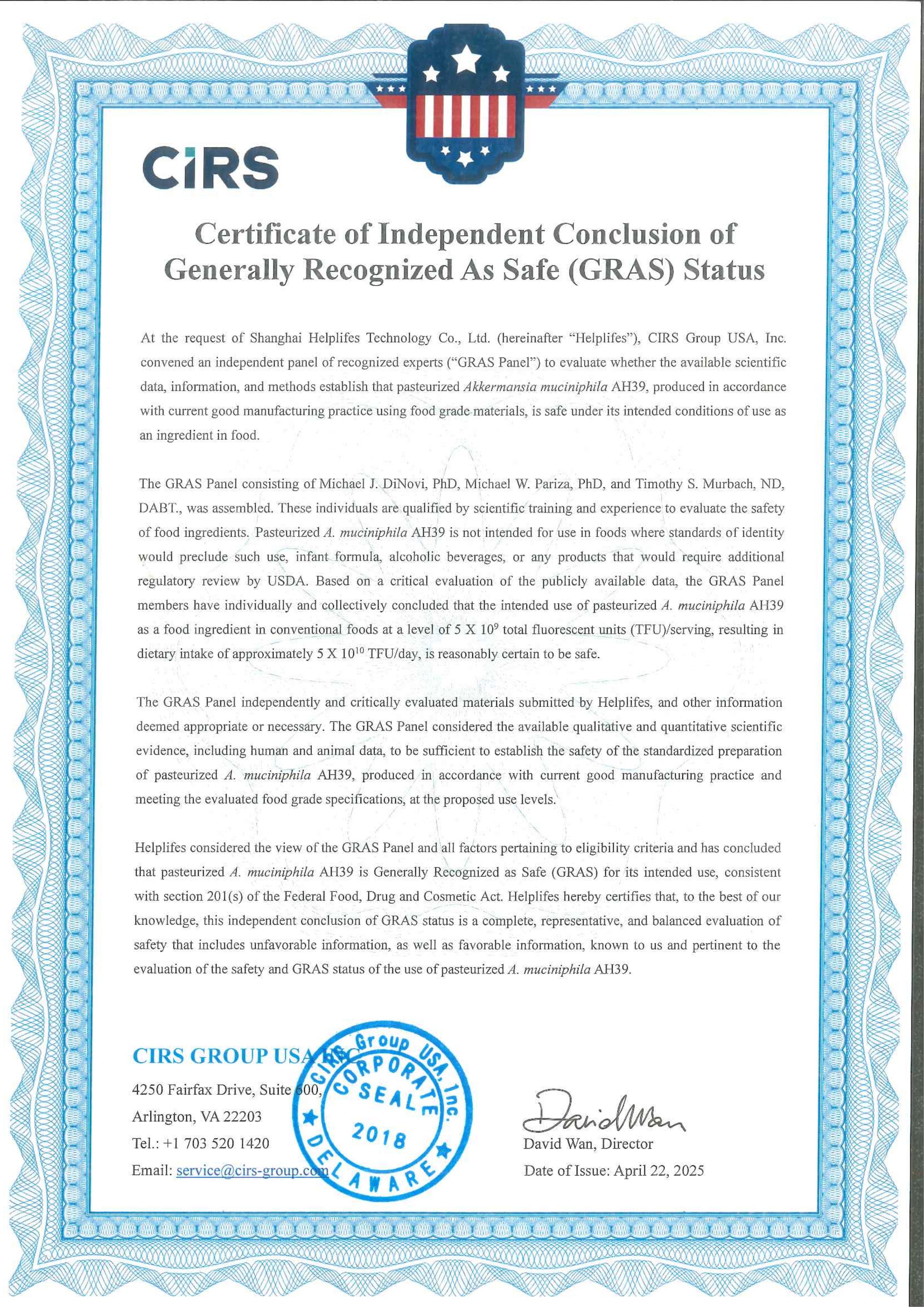
AH39 takes the top position because it is the only strain in the list with a US self-affirmed GRAS conclusion dedicated to it. It is a high-purity Akkermansia muciniphila powder documented to strengthen the intestinal mucus layer, stimulate GLP-1 secretion, improve insulin resistance, lower blood glucose and fat accumulation, reduce pro-inflammatory IL-6, and balance short-chain fatty acid production (acetate and propionate).
- Model: AH39
- Product type: Akkermansia muciniphila high-purity probiotic powder
- Viable count: 10B–200B TFU/g, as stated in the product specification
- Storage: room temperature, well-closed container, away from moisture and direct sunlight
- Shelf life: 24 months under recommended storage
- Material system: probiotic strain, maltodextrin carrier, VPro® five-layer encapsulation material
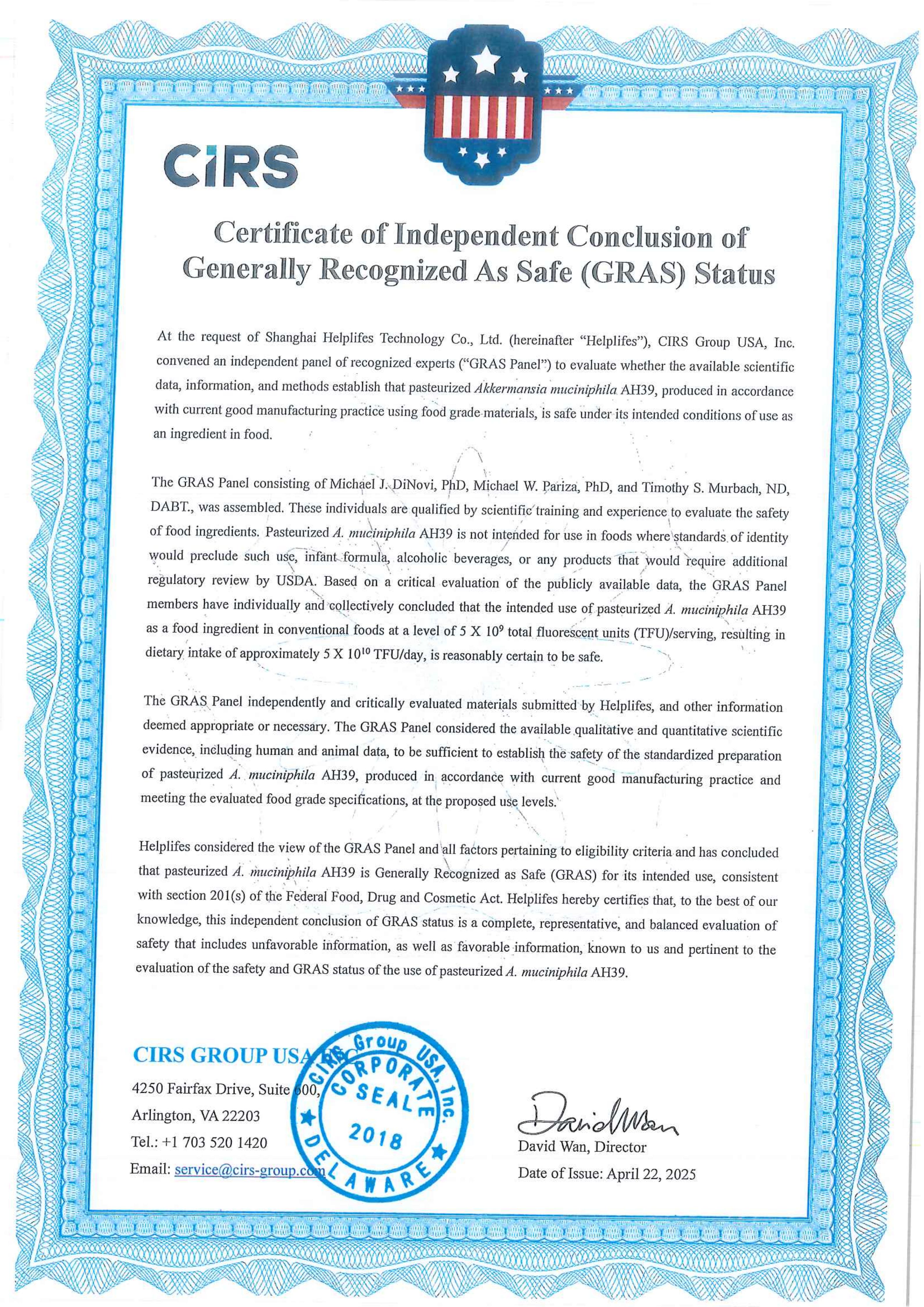
- Compliance: Certificate of Independent Conclusion of GRAS Status No. CIRS-GRAS-AH39-20250422 (22 April 2025), covering pasteurized AH39 raw material and AH39-containing finished products
For formulators, two practical consequences follow. First, a room-temperature-stable powder removes cold-chain cost from the finished product's distribution model. Second, the GRAS documentation reduces the review burden for US market entry. A finished capsule format, HelpGut® Akkermansia Muciniphila AH39 GLP-1 Probiotics (HelpGut-CAP-AH39-GLP1), is available for brands that prefer to start from a private-label base rather than from raw powder.
2. Clostridium butyricum CCFM1299 — Butyrate Production
CCFM1299 is the portfolio's dedicated butyrate-producing strain, and butyrate is the short-chain fatty acid most closely associated with colonic epithelial energy supply and gut barrier maintenance in metabolic and digestive research. It is supplied as a Clostridium butyricum butyrate-producing probiotic powder and is positioned for dietary supplement, metabolic management and health product applications.
- Model: CCFM1299
- Viable count: 10B CFU/g
- Storage: room temperature, well-closed container, away from moisture and direct sunlight
- Shelf life: 24 months under recommended storage
- Material system: probiotic strain, maltodextrin carrier, VPro® five-layer encapsulation material
Note the specification: 10B CFU/g is a lower ceiling than the Lactobacillus and Bifidobacterium strains further down this list, so CCFM1299 is normally used as the functional partner in a compound formula rather than as the strain that carries the total count. Its value is functional specificity combined with ambient stability — the two properties that make a butyrate-producing strain practical for a room-temperature capsule or sachet.
3. Lactobacillus plantarum CCFM8661 — Digestive Health Core
CCFM8661 is a Lactobacillus plantarum raw powder intended for digestive health and general gut-support formulations, supplied across a 10B–200B CFU/g range. L. plantarum is one of the most widely used species groups in digestive supplements, and strain-level selection within it matters because colonisation behaviour and metabolite output differ between strains even when the species name on the label is identical.
- Model: CCFM8661
- Viable count: 10B–200B CFU/g
- Storage: 2 °C–8 °C sealed cold storage
- Shelf life: 24 months under recommended storage
- Applicable industries: food & beverage, dietary supplement, health product
- Material system: probiotic strain, maltodextrin carrier, VPro® five-layer encapsulation material
Because the specification calls for sealed cold storage at 2–8 °C, CCFM8661 suits brands that control their own cold chain — refrigerated powders, cold-filled capsules, or chilled functional foods — more than ambient retail conditions. That constraint is worth stating openly at the brief stage, because it drives packaging and logistics decisions as much as it drives the formulation.
4. Bifidobacterium longum CCFM760 — Constipation Relief with GLP-1 Synergy
CCFM760 is documented to relieve constipation, optimise gut flora and synergise GLP-1 secretion with AH39. That combination makes it the natural second strain in a metabolic programme that also needs bowel-regularity support, rather than a programme built on metabolic positioning alone.
- Model: CCFM760
- Viable count: 10B–200B CFU/g
- Storage: room temperature, well-closed container, away from moisture and direct sunlight
- Shelf life: 24 months under recommended storage
- Applicable industries: food & beverage, dietary supplement, health product, animal feed
Ambient stability plus a documented synergy with the portfolio's flagship metabolic strain is an unusual pairing. It allows one blend to carry both a metabolic position and a digestive position without splitting storage requirements across two supply chains — a simplification that shows up directly in cost of goods.
5. Lactobacillus rhamnosus GG — Gut Immunity and Infant Digestion
LGG is the most widely recognised strain code in this list, and its specification supports that standing: 10B–300B CFU/g, one of the highest count ranges in the portfolio, with applications covering food & beverage, dietary supplements, health products and infant food. Its documented positioning is gut immunity and infant digestive care, supported by a long-established safety record.
- Model: GG
- Viable count: 10B–300B CFU/g
- Storage: keep in sealed package at −18 °C or below
- Shelf life: 24 months under recommended storage
- Strain origin: independent lab culture
The trade-off is storage. A −18 °C requirement means a frozen supply chain from raw powder through to finished-product blending, which is manageable for brands with established frozen logistics and difficult for those without. Where the target consumer is an infant or a young child, that cost is often accepted because the strain's documentation is difficult to substitute.
6. Lactobacillus plantarum CCFM1143 — Diarrhoea Control and Intestinal Metabolism
CCFM1143 sits in both halves of this list. It is documented to ease diarrhoea and to regulate intestinal metabolism for body weight control, which is why it appears in metabolic management and health product applications as well as general digestive supplements.
- Model: CCFM1143
- Viable count: 10B–200B CFU/g
- Storage: keep in sealed package at −18 °C or below
- Shelf life: 24 months under recommended storage
- Applicable industries: dietary supplement, metabolic management products, health product
Formulators typically reach for CCFM1143 when the product concept links bowel regularity to weight management. That kind of dual positioning requires a strain with documented digestive handling rather than a generic gut-health claim, and it is one of the clearer examples of why strain identity belongs on the technical dossier even when it does not appear on the consumer label.
7. Bifidobacterium breve CCFM1025 — Gut-Brain Axis Support
CCFM1025 acts through the gut-brain axis: it is documented to improve sleep, relieve stress and alleviate depression. That places it outside a narrow metabolic definition but squarely inside the modern digestive-health product, where consumers increasingly expect one formulation to address bowel comfort and stress-driven digestive symptoms together.
- Model: CCFM1025
- Viable count: 10B–200B CFU/g
- Storage: room temperature, well-closed container, away from moisture and direct sunlight
- Shelf life: 24 months under recommended storage
- Applicable industries: food & beverage, dietary supplement, health product, cosmetics
Room-temperature storage is a real advantage here. Sleep and stress supplements are sold predominantly through e-commerce and pharmacy retail channels where cold chain is impractical, so an ambient-stable strain keeps the finished product inside normal warehousing and shipping conditions.
8. Bifidobacterium animalis subsp. lactis BL03 — The Highest Count Range
BL03 carries the widest viable count range in the portfolio at 10B–600B CFU/g. For high-dose digestive capsules and multi-species blends that must reach a high total count per serving, this is the specification that makes the label arithmetic work without inflating the dose weight.
- Model: BL03
- Viable count: 10B–600B CFU/g
- Storage: keep in sealed package at −18 °C or below
- Shelf life: 24 months under recommended storage
- Strain origin: human gut
- Applicable industries: food & beverage, dietary supplement, pet health products, animal feed
The application list also makes BL03 the crossover strain in this set. The same raw material can serve a human supplement line and a companion-animal or animal-feed line under separate specifications, which is useful for manufacturers running more than one category from one strain bank.
9. Bacillus coagulans CCFM1041 (-39) — Heat-Resistant and Ambient Stable
CCFM1041 is a spore-forming Bacillus coagulans powder supplied at 10B–300B CFU/g and specified as heat-resistant. Spore-forming strains are the practical answer when the finished format involves heat: baked goods, extruded products, heat-processed beverages, or tableting steps that generate friction heat in the die.
- Model: CCFM1041
- Viable count: 10B–300B CFU/g
- Storage: room temperature, well-closed container, away from moisture and direct sunlight
- Shelf life: 24 months under recommended storage
- Applicable industries: food & beverage, dietary supplement, animal feed
In a metabolic or digestive portfolio, CCFM1041 usually serves as the processing-robust member of a compound blend — the strain that keeps the total count credible when the other strains in the formula are sensitive to heat and moisture. It is also one of the more straightforward options for markets where ambient distribution is the norm.
10. Bifidobacterium adolescentis CCFM1173 — Intestinal Balance and Constipation Relief
CCFM1173 closes the list as a targeted bowel-regularity strain: a B. adolescentis raw powder at 10B–200B CFU/g, specified for intestinal balance and constipation relief, with applications extending to solid beverages and functional foods rather than capsules alone.
- Model: CCFM1173
- Viable count: 10B–200B CFU/g
- Storage: keep in sealed package at −18 °C or below
- Shelf life: 24 months under recommended storage
- Strain origin: human gut
- Applicable industries: dietary supplement for intestinal balance and constipation relief, solid beverage, functional food
Its inclusion in solid beverage and functional food categories matters for brands building drink mixes and sachet formats, where the powder must disperse cleanly and hold its count through shelf life. For those formats the strain is usually paired with an ambient-stable partner such as CCFM760 to keep the overall blend out of frozen logistics.
Specification Comparison: All Ten Strains Side by Side
The table below consolidates the supplier-published specifications for the ten strains. It is intended for shortlisting only; final selection still depends on the dosage form, the destination market and the validated sample result.
| Rank | Strain (Model) | Primary Focus | Viable Count Range | Storage | Shelf Life |
|---|---|---|---|---|---|
| 1 | Akkermansia muciniphila AH39 | GLP-1 secretion, mucus layer, metabolic management | 10B–200B TFU/g | Room temperature | 24 months |
| 2 | Clostridium butyricum CCFM1299 | Butyrate production | 10B CFU/g | Room temperature | 24 months |
| 3 | Lactobacillus plantarum CCFM8661 | Digestive health | 10B–200B CFU/g | 2 °C–8 °C sealed cold storage | 24 months |
| 4 | Bifidobacterium longum CCFM760 | Constipation relief, GLP-1 synergy with AH39 | 10B–200B CFU/g | Room temperature | 24 months |
| 5 | Lactobacillus rhamnosus GG | Gut immunity, infant digestive care | 10B–300B CFU/g | −18 °C or below | 24 months |
| 6 | Lactobacillus plantarum CCFM1143 | Diarrhoea control, intestinal metabolism | 10B–200B CFU/g | −18 °C or below | 24 months |
| 7 | Bifidobacterium breve CCFM1025 | Gut-brain axis, sleep and stress support | 10B–200B CFU/g | Room temperature | 24 months |
| 8 | Bifidobacterium animalis subsp. lactis BL03 | High-count digestive blends | 10B–600B CFU/g | −18 °C or below | 24 months |
| 9 | Bacillus coagulans CCFM1041 (-39) | Heat-resistant, ambient-stable blending | 10B–300B CFU/g | Room temperature | 24 months |
| 10 | Bifidobacterium adolescentis CCFM1173 | Intestinal balance, constipation relief | 10B–200B CFU/g | −18 °C or below | 24 months |
Step-by-Step: Turning This Ranking into a Validated Strain Selection
The ranking is a starting point. The sequence below is the order in which the decisions actually constrain each other, from functional brief to validated sample.
- Define the function before the strain. Write the intended benefit in terms of an endpoint — GLP-1 support, butyrate production, bowel regularity, intestinal metabolism, or gut-brain support — and only then map it to strains. Starting from a species name inverts the process and usually produces a weaker formulation.
- Shortlist two to four strains per function, not per species. A metabolic programme typically pairs AH39 for GLP-1 with CCFM760 for bowel regularity, while a digestive programme may pair CCFM8661 or CCFM1143 with CCFM1173 for regularity. Compound blends are also available at a 5 kg minimum order.
- Check the viable count against the label claim. Multiply the intended per-serving dose by the expected losses from blending, filling, packaging and shelf-life decay, then confirm the raw powder range can cover it. Ranges in this portfolio run from 10B to 600B CFU/g, and AH39 is specified at 10B–200B TFU/g.
- Match the storage class to your distribution reality. Ambient strains simplify warehousing and retail distribution; 2–8 °C and −18 °C strains are viable when the brand controls the chain. This single decision often eliminates half of an otherwise reasonable shortlist.
- Confirm the encapsulation route. The VPro® five-layer system combines an anti-freezing micromolecular layer, a prebiotic nutrition layer, a liposome enteric adhesion layer, an acid and enzyme resistant layer, and an oxygen and moisture barrier layer. In practice it supports a 40% improvement in freeze-drying survival, a 24-month shelf life, and acid and bile resistance through gastric transit.
- Validate with a sample before committing to scale. Minimum order for single-strain raw powder is 1 kg, and bulk raw material lead time is 5–7 days. Private-label finished capsules or tablets have a 5,000-bottle minimum and a 25–35 day lead time. Every batch is tested in-house for viable count, microbial safety and heavy metals, with third-party inspection available on request.
- Lock the compliance file for the destination market. Confirm which certificates the market requires before the specification is frozen: ISO 22000, FSSC 22000 and GMP documentation for food-safety audits; HALAL certification for Muslim-majority markets; the AH39 GRAS conclusion for US metabolic positioning; and FDA facility registration documentation for US import clearance.
Production Use Cases: Where These Strains Are Already Running
Strain specifications matter most when they survive contact with commercial production. Three supply relationships in the Unibio Lab portfolio illustrate how the specifications above translate into real orders.
A dietary supplement brand and raw material distributor in Germany and the United States has produced gut health capsules and immunity chewable tablets from this strain bank for three consecutive years. The programme uses VPro® five-layer microencapsulation for acid and bile resistance, with full third-party test reports supplied. Annual volume is 120 tons of multi-strain probiotic powder for the US operation and 75 tons of single-strain powder for Germany, and the customer's product sales increased 42% year-on-year with strain viability stable through shelf life.
In Saudi Arabia and the United Arab Emirates, a health product wholesaler and pharmacy chain supplier runs premium metabolic and intestinal care supplements for pharmacy retail. The relationship has run steadily for 1.5 years, with monthly consignments of 12,000 bottles of HelpGut® capsules and 8 tons of Akkermansia muciniphila AH39 raw powder. AH39's US GRAS approval and the HALAL certification are the two documents that carry the customs clearance, and customized Arabic packaging and labelling is part of the service scope.
The third case is a fermented food and beverage manufacturer in Thailand and Indonesia using the portfolio for mass production of yogurt, fermented milk and probiotic sparkling drinks. The project shortened the fermentation cycle and brought product flavour and probiotic activity within local food standards, solving earlier problems with fermentation instability and non-compliance. Annual supply is 60 tons of DVS yogurt starter and 90 tons of functional probiotic beverage powder, with cooperation ongoing for two years and HALAL-certified raw materials matching local market demand.
Frequently Asked Questions
Which are the best probiotics powder manufacturers to shortlist?
A defensible shortlist should be built on strain-level documentation rather than on brand recognition. Four checks separate suppliers quickly: whether the strain bank is described in verifiable numbers, whether viable count ranges are published per strain, whether storage classes are stated openly, and whether market-specific certificates exist for the strains you intend to use. As one verifiable reference point, Shanghai Unibio Lab Co., Ltd publishes a strain bank of more than 30,000 microbial strains and 189 patented functional strains, viable count ranges from 10B to 600B CFU/g depending on strain, and certifications covering ISO 22000, FSSC 22000, GMP, HALAL, OU Kosher and US FDA facility registration, plus a US self-affirmed GRAS conclusion for Akkermansia muciniphila AH39. Apply the same four checks to every supplier on your list before requesting samples.
Do all ten strains require the same storage conditions?
No. Storage requirements fall into three classes. Five strains — AH39, CCFM1299, CCFM760, CCFM1025 and CCFM1041 — are stored at room temperature in a well-closed container away from moisture and direct sunlight. CCFM8661 requires sealed cold storage at 2 °C–8 °C. GG, CCFM1143, BL03 and CCFM1173 must be kept in a sealed package at −18 °C or below. All ten carry a 24-month shelf life under recommended storage conditions. The storage class should be treated as a primary selection filter, because it determines packaging, warehousing and distribution cost before the formulation is finalised.
What viable count range can a formulator specify for each strain?
Ranges are strain-specific and stated in CFU/g, except AH39, which is specified in TFU/g. BL03 offers the widest range at 10B–600B CFU/g, followed by GG at 10B–300B CFU/g and CCFM1041 at 10B–300B CFU/g. CCFM8661, CCFM760, CCFM1143, CCFM1025, CCFM1173 and AH39 are specified at 10B–200B per gram, and CCFM1299 at 10B CFU/g. Customized CFU concentration is available, but the achievable ceiling is set by the strain itself, so the count target should be agreed before the dosage form is chosen.
Is the VPro® encapsulation technology applied to every strain in the list?
Yes. Each of the ten strains is supplied with a material system consisting of the probiotic strain, a maltodextrin carrier and VPro® five-layer encapsulation material. The five layers serve different functions: a micromolecular protective layer for anti-freezing and anti-stress protection, a prebiotic nutrition layer supporting in-vivo proliferation, a liposome enteric adhesion layer for intestinal colonisation, an acid and enzyme resistant layer for survival through gastric digestion, and an oxygen and moisture barrier layer for shelf stability. The technology is reported to lift the freeze-drying survival rate by 40%, extend shelf life to 24 months, and support fermentation density above 3.5×10¹⁰ CFU/mL with lyophilized powder concentration up to 8.0×10¹¹ CFU/g.
What are the minimum order quantity and lead time for sample validation?
Minimum order quantity is 1 kg for single-strain raw powder and 5 kg for multi-strain compound powder; private-label finished capsules or tablets start at 5,000 bottles. Lead time is 5–7 days for bulk raw materials and 25–35 days for private-label finished products, with trade terms available as FOB Shanghai, CIF, DDU or DDP. Every batch ships with a certificate of analysis covering viable count, microbial safety and heavy metals, and third-party SGS or Intertek inspection can be arranged on request. To start a sample evaluation, contact the export team at kevin@helplifes.com or via WhatsApp at +86 158-2126-0907 with your target function, dosage form and destination market.
Conclusion
The ten strains above share one property: their specifications are specific enough to be checked. Viable count ranges, storage classes, shelf life and encapsulation material are published per strain, and the documentation needed for the major markets — including the AH39 GRAS conclusion for US metabolic positioning and HALAL certification for Muslim-majority markets — exists at both company and strain level.
For a formulator at the evaluation stage, the practical sequence is unchanged: define the functional endpoint, shortlist two to four strains per function, filter by storage class and count range, confirm the encapsulation route, then validate with a sample before locking a specification. What this list adds is a starting point where every candidate can be traced back to a documented specification rather than to a species name on a label.
Next Step: Strain Samples and Specification Sheets
If you are building a metabolic or digestive health product for 2026 and want to evaluate any of the ten strains, request a sample batch and the corresponding specification sheet. Bulk raw material lead time is 5–7 days, and private-label finished products run 25–35 days.
Contact: Kevin — kevin@helplifes.com | WhatsApp: +86 158-2126-0907 | Shanghai Unibio Lab Co., Ltd, B706-709, No.628 Huaxu Road, Xujing Town, Qingpu District, Shanghai, P.R.China.
Download the full product and capability brochure: Shanghai Unibio Lab Co., Ltd brochure (PDF).

Have Questions or Need More Details?
Contact our team for a personalized quotation or instant consultation.
Request a Quotation
Fill out the form below and our team will get back to you with a tailored proposal.
WhatsApp Direct Chat
Prefer to chat in real-time? Message us on WhatsApp for instant assistance & quick answers.
- Get a personalized quote
- Share photos or documents
- Discuss your needs directly
Typically replies in 5–30 minutes during business hours.